For most first-time international visitors, we recommend two or three days. The city is easier when sunrise, temples, Sarnath and the evening river ceremony are spread across separate outings rather than packed into one long day.
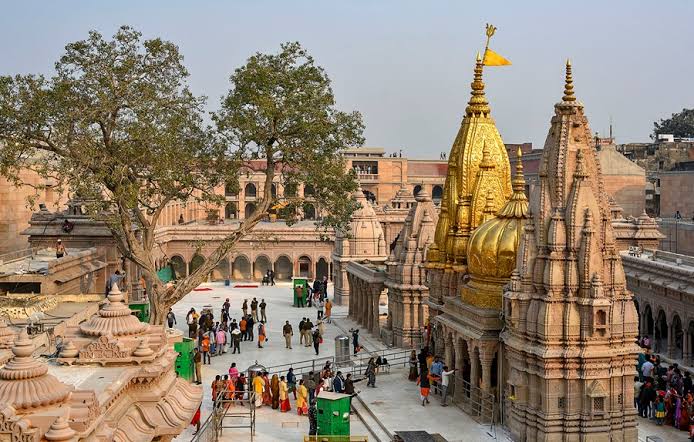
What happens when you arrive at Varanasi Airport?
At present there is one main passenger exit. For our private arrivals, a Tour Varanasi representative waits outside with a clearly visible name placard, welcomes the guest, helps with luggage and walks with them to the vehicle. During the drive to the hotel, we briefly explain the programme and confirm the first sightseeing pickup. At the hotel, the representative can assist with check-in and reconfirm the next meeting time; the assigned guide then meets the guest in the lobby for the first outing.
What happens when you arrive by train?
For rail arrivals, we normally ask guests to step out of their coach and remain close to that coach rather than immediately walking through a crowded station. Using the train and PNR information, our representative knows which coach to look for and reaches the platform with a name placard. Once the guest is identified, the representative assists with luggage and follows the same transfer and briefing process used for an airport arrival. This is especially useful for elderly travellers and first-time visitors.
How many days do you need in Varanasi?
One day works when time is limited, but it is intensive. Our 1 Day Varanasi Tour is designed as a full private day.
Two days is a good minimum for many first-time visitors. It gives time for the old city and Ganga Aarti, then sunrise, sacred Varanasi and Sarnath. See our 2 Day Varanasi Tour.
Three days is our preferred pace for travellers who want proper breaks and a little more cultural depth. See the 3 Day Varanasi Tour.
Four days works especially well for travellers who dislike rushed sightseeing. It allows shorter outings, more hotel time and optional food, music or craft experiences. See the 4 Day Varanasi Tour.
Still deciding between a short visit and a slower stay? Our guide to how many days you need in Varanasi compares one to four days and explains how arrival times affect your usable sightseeing time.
Where should you stay?
Riverfront and ghat hotels give you atmosphere and immediate access to the old city, but vehicle access can be limited. Some transfers may involve walking or, for particular properties, boat arrangements.
Assi suits travellers who want river life in a slightly more open part of the city.
Cantonment and Nadesar are usually easier for private cars and suit guests who value quiet rooms, larger hotel facilities and straightforward road access.
The best hotel area depends on what matters most to you: river view, easy vehicle access, a lift, larger rooms, heritage character or quiet nights.
What should a first-time visitor definitely see?
We would normally build a first visit around five things: sunrise on the Ganges, the evening Ganga Aarti, an old-city walk, sacred Varanasi including Kashi Vishwanath where appropriate, and Sarnath.
Beyond these, add experiences according to your interests rather than simply filling the day with more sightseeing. For a different side of the city, consider the Southern Kashi Walk or Bengali Tola & Riverside Lanes. Good options include a Varanasi Food Walk, Banarasi Silk & Weaving Experience, classical music experience or the more reflective Death & Rebirth Walk.
Is Varanasi difficult to explore?
The airport transfer can make Varanasi look easier than it really is. Once sightseeing moves towards the old city, temples and Ganga Aarti areas, traffic and pedestrian restrictions can change travel times dramatically. A short distance on a map may take much longer than expected.
We therefore plan sightseeing by area and opening time, not just by kilometres. The aim is to avoid unnecessary backtracking and to keep nearby places together in one outing.
How much walking is involved?
Most visitors should expect some walking. The old city cannot be experienced entirely from a car. The amount can, however, be reduced by choosing shorter routes, using suitable drop-off points and avoiding unnecessary backtracking.
If mobility is a concern, tell us before travel. We can plan a gentler version rather than discovering the problem after you arrive.
Is Varanasi suitable for travellers aged 60 or 70+?
Yes, but the programme should be designed around mobility rather than simply using a standard itinerary. We plan the boat boarding point, wheelchair assistance where vehicles stop, rickshaw pickup points, the nearest practical toilets and sensible rest breaks in advance. The guide also needs to know where a guest can sit or use a toilet before the need becomes urgent.
The ghats do not have wheelchair ramps down to the river, so boat boarding may require steps and physical assistance. Hotel choice matters too: some beautiful riverfront properties involve substantial stair climbing from the boat landing before the guest reaches the reception or lift level. For guests with significant mobility limitations, we normally prefer easier road access and then arrange the river experiences separately.
Sunrise boat ride
Morning on the Ganges is one of the best introductions to Varanasi. From the river you see bathing rituals, temple activity, residents exercising, laundry, boats and the long line of ghats in softer light.
We normally prefer a private boat. Operations remain subject to river levels and local administration. Read our Sunrise Boat Ride in Varanasi guide.
Ganga Aarti: seating or boat?
The evening Aarti is a large public ceremony. Reserved seating is often the more comfortable choice for mature travellers because you have a defined place to sit. A boat can give a wider view when river operations are permitted.
There is no single best option for everyone. We advise according to the season, crowd levels and your comfort. See our Ganga Aarti experience.
Kashi Vishwanath Temple
Kashi Vishwanath is one of the city’s most important temples. Darshan simply means seeing or being in the presence of the deity.
Security procedures are strict and access arrangements can change. Phones and other items may need to be left in lockers, and walking is normally required from the nearest permitted access point. We confirm the practical procedure close to the visit rather than making a permanent promise online.
Which temples should a first-time visitor prioritise?
Apart from Kashi Vishwanath, the two temples we most often prioritise for interested first-time visitors are Kaal Bhairav and Sankat Mochan. Annapurna, Vishalakshi and Tulsi Manas can be added when the stay is longer or the traveller has a stronger religious interest.
For international cultural visitors without a particular devotional interest, we generally prefer fewer temple stops with better explanation. A walk through the Kashi Vishwanath Corridor with a knowledgeable guide can be more meaningful than trying to collect a long list of temples without context.
Temple timings and etiquette
Many Varanasi temples close during the middle of the day, commonly around 12 noon to 2 PM; Kaal Bhairav and Sankat Mochan may remain closed until around 3 PM. Rituals and Aarti inside a temple can also temporarily affect general darshan. We reconfirm timings because religious schedules can change.
We recommend modest clothing for temple visits and generally advise against shorts. Photography should not be assumed inside temples, and we do not recommend photographing funeral ceremonies or families at the cremation ghats.
Manikarnika Ghat
Manikarnika is one of Varanasi’s principal cremation ghats. Cremation here is part of living religious practice, not a staged visitor attraction.
A knowledgeable guide can explain the beliefs and customs respectfully. Intrusive photography of cremations should be avoided.
Sarnath
Sarnath is important for both history and Buddhism. It is where the Buddha gave his first sermon after enlightenment. Dhamek Stupa, the archaeological remains and the Buddhist institutions around the site give the visit a very different atmosphere from central Varanasi.
We normally allow a separate half day rather than rushing it between other sights.
Before fixing the day, read our Sarnath from Varanasi planning guide for the half-day sequence, museum closure and hotel pickup considerations.
Best time to visit
The cooler months are the easiest for long days outdoors. Summer can be very hot, while the monsoon can affect river levels and boat operations. Festival dates can be memorable but also much busier.
There is no need for a complicated weather table: choose your dates around your tolerance for heat, crowds and early starts, then allow us to adjust the programme to the season.
What should you wear?
Comfortable, modest clothing works best. Shoulders and knees should generally be covered for religious visits. Shoes are removed at many temples, so easy footwear is useful.
You do not need to dress like a pilgrim. Your guide will explain local customs as they arise.
What should visitors avoid?
Avoid trying to photograph every ritual, following unofficial access promises, overloading each day and treating cremation areas as spectacle. Also avoid assuming a car can take you directly to every temple or ghat.
Varanasi is much easier when you leave a little space in the day.
Prefer to explore with someone who can explain the rituals and adjust the walking? Read about private guide costs and booking options in Varanasi, including guide-only arrangements and what to include. For a complete stay, see our two-night luxury Varanasi itinerary, with Sankalp Aarti, a private sunrise boat with flute music and Sarnath.
Suggested first-time itineraries
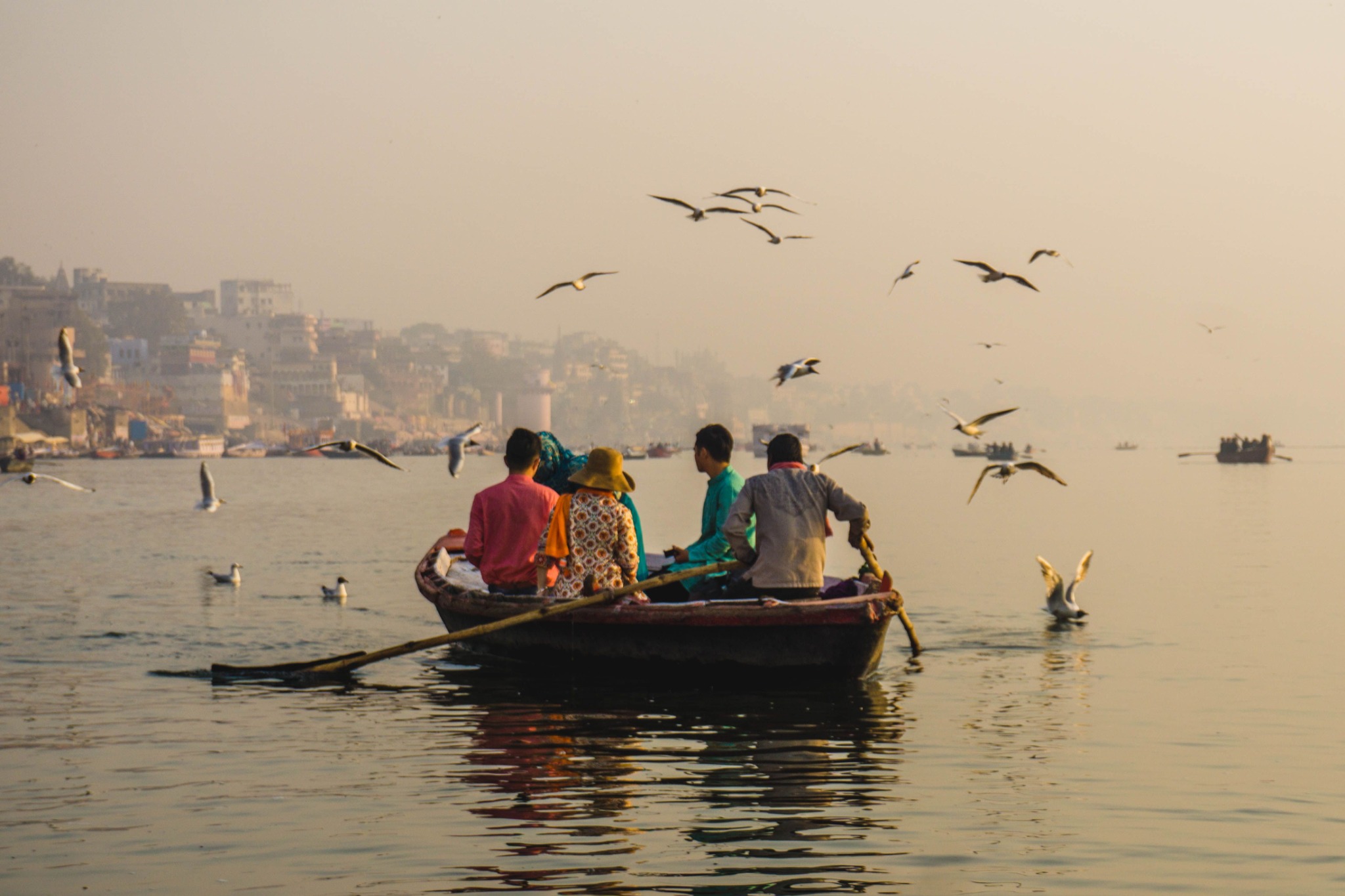
The sunrise boat is only the first part of the experience.
After the private sunrise boat ride, we normally continue directly into an old-city walking tour rather than simply returning by boat to the starting point. Guests usually disembark at Manikarnika Ghat, where the guide sensitively explains the cremation rituals, the significance of the ghat and the Hindu understanding of death and liberation. We avoid this section completely for guests who do not wish to see or discuss a cremation ghat, and we discourage intrusive photography.
From there the walk continues through the old lanes towards the flower market at Chowk, the traditional perfume market, Kachori Gali — one of the old city's food streets — and the Kashi Vishwanath area and corridor. Guests who wish to enter Kashi Vishwanath Temple can ask us to arrange a skip-the-line darshan option in advance, wherever the official facility is operating; temple entry remains optional and is planned around the rules for the travel date. The guide then continues with the guests to the practical vehicle meeting point for the return to the hotel for breakfast and rest.
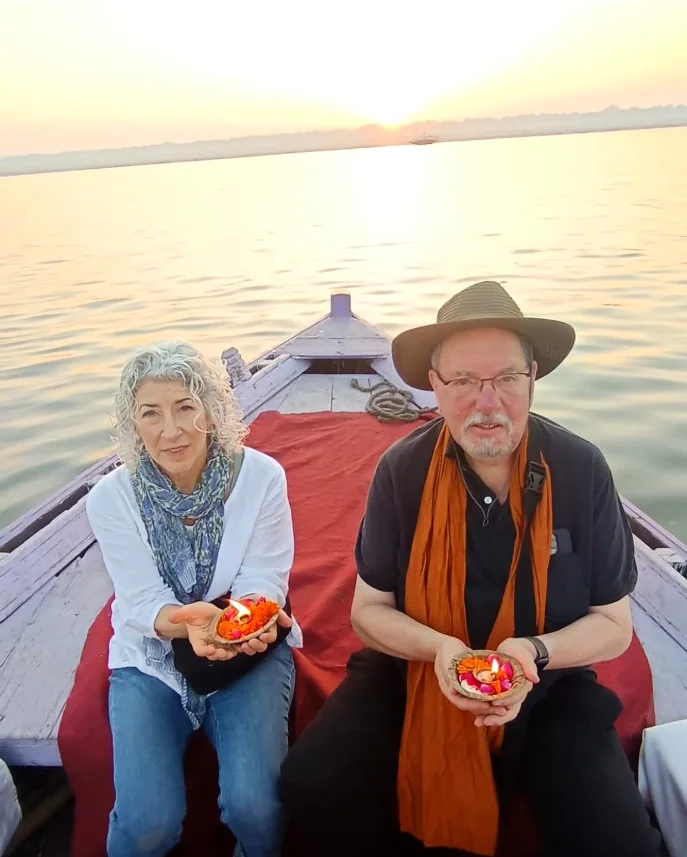
We use the river as the beginning of the morning, then connect it naturally with the lanes, markets and sacred geography behind the ghats.
For Ganga Aarti, we usually prefer a balcony to a boat.
A boat sounds atmospheric, but on a normal busy evening guest boats may be held several rows away from the riverfront ceremony at Dashashwamedh Ghat. There can be several boats between your boat and the priests, and once passengers stand up the view can become partly or completely obstructed. From farther out on the river, the chanting, mantras, bells and rhythm of the ceremony also do not reach guests as clearly. For most first-time visitors we therefore prefer a pre-arranged elevated balcony position close to the Aarti, where the view is fixed, the ceremony is easier to hear and guests do not have to depend on where a boat is allowed to stop.
Sankalp Aarti is another option. For guests who want a closer and more devotional experience, we can arrange Sankalp Aarti tickets in advance, subject to availability and the operating arrangements on the travel date. Reserved land seating can also be considered for guests who prefer not to use a balcony.
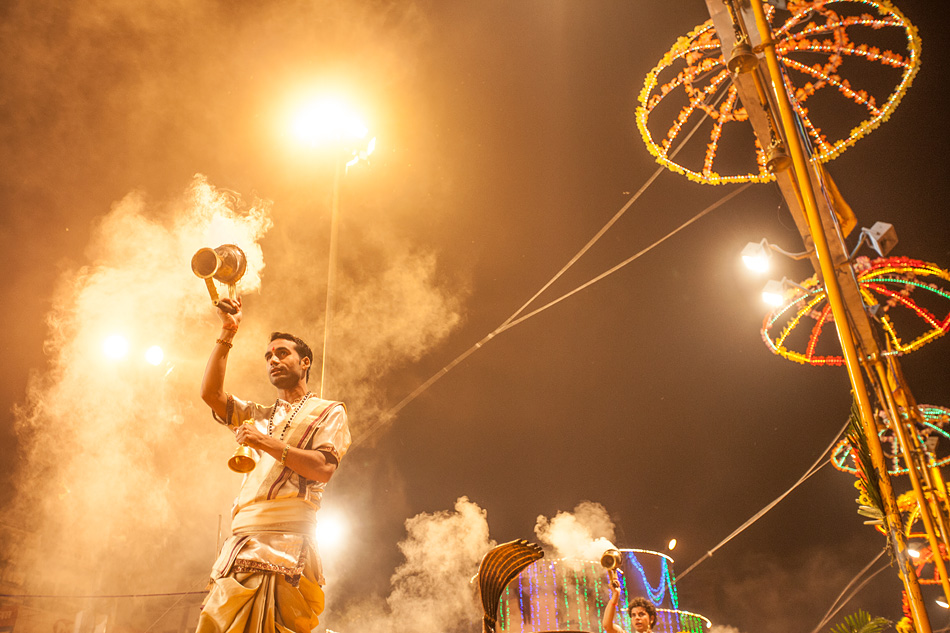
An elevated, fixed position usually gives a clearer view than being several boats deep on the river.
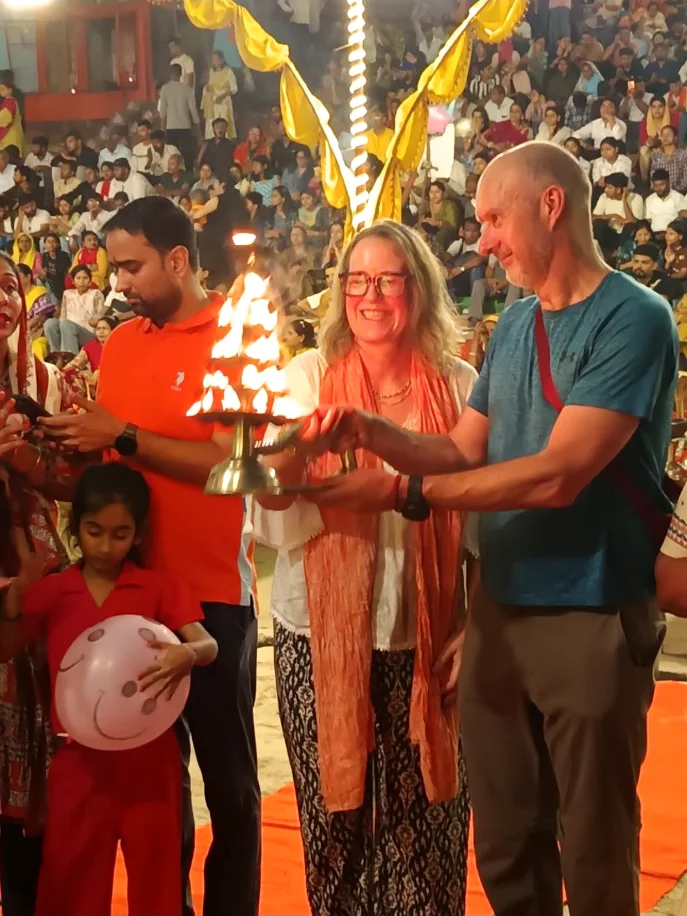
A more involved option for guests who would like to experience the ritual from closer range.
Tell us how you would like to experience Varanasi.
Share your dates, interests and preferred pace. We will suggest a private programme that fits you.