Allow a half day for Sarnath from Varanasi, including around 2½ hours at the sights plus your hotel transfers. Prioritise Dhamek Stupa, the archaeological remains and the museum when open. The museum is closed on Fridays.
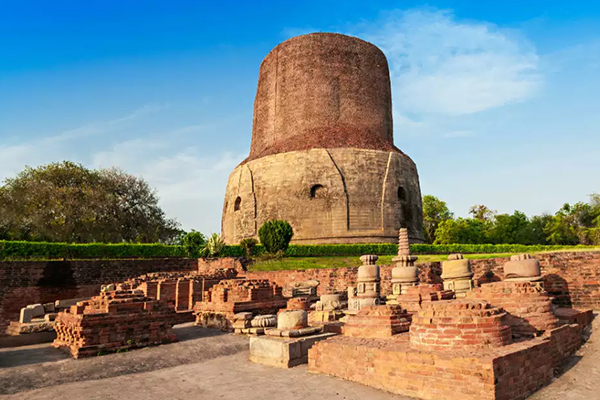
Why Sarnath matters
Sarnath is associated with the Buddha’s first sermon after enlightenment. The archaeological landscape, stupas and later Buddhist institutions make it one of the key places for understanding the beginning of the Buddhist teaching tradition.
What to see
A normal visit focuses on Dhamek Stupa, the archaeological remains and Mulagandha Kuti Vihara. The archaeological museum is also valuable when open and practical within the day. Because museum schedules can change, we check current opening information close to travel.
How much time to allow
For a proper first visit, we normally allow about 2½ hours at Sarnath. That is enough time to understand the archaeological area and museum without reducing the visit to a hurried photo stop. Travel time from Varanasi is additional and varies with traffic.
Why a guide helps
The site can look deceptively simple if you walk through without context. A knowledgeable guide can explain the development of early Buddhism, the remains of the monastic complex and why Sarnath is important to Buddhist pilgrims from many countries.
When to visit
We usually find that midday, either before or after lunch, fits Sarnath best into a Varanasi itinerary. The early morning is better kept for the river and old city, while the evening should remain unhurried for the Ganga Aarti.
What to prioritise when time is short
If time is limited, we prioritise the archaeological ruins and Archaeological Museum. The monasteries are worthwhile for guests with a deeper Buddhist interest, but they are the first element we reduce when the schedule is tight. The museum is normally closed on Fridays, and we reconfirm current timings before travel.
A planning mistake we avoid
We do not like placing Sarnath immediately after a late-afternoon arrival and then rushing back for the evening Ganga Aarti. It may fit on paper, but in practice it compromises both experiences. Sarnath needs enough time to understand the site, and the Aarti is better enjoyed without constantly watching the clock.
For Buddhist travellers
If Sarnath is more than a half-day sightseeing stop for you, it can become the natural beginning of a longer journey to Bodh Gaya, Rajgir, Nalanda, Kushinagar and Lumbini.
The museum needs to be planned, not assumed
The Archaeological Museum is one of the most useful parts of Sarnath for travellers who want to understand the site rather than only photograph Dhamek Stupa. It has its own opening schedule and is traditionally closed on Friday, so we do not build every Sarnath visit around it without checking the day. When the museum is unavailable, the archaeological zone, stupa, temple and interpretation from a knowledgeable guide still make the excursion worthwhile.
Combine Sarnath carefully with a sunrise morning
A common and comfortable sequence is sunrise boating, a short old-city walk, return to the hotel for breakfast and then Sarnath. This works better than driving directly from the ghats while guests are tired, hungry and carrying camera equipment. For travellers who prefer a late start, Sarnath can move to the afternoon, but we watch closing times rather than assuming every monument remains open until evening.
What Buddhist guests often want differently
A pilgrim or serious Buddhist traveller may want quiet time at Mulagandha Kuti Vihara, chanting, meditation or a slower explanation of the monastic ruins. That requires more time than a standard sightseeing stop. Tell us the purpose of the visit and we will reduce other stops rather than force a spiritual programme into the same timetable as a quick half-day city excursion.
Road time is usually manageable but still variable
Sarnath is close to Varanasi, yet city traffic can make the transfer slower at busy times. We therefore avoid placing a fixed airport departure immediately after a full Sarnath visit without adequate buffer. The same applies if the guest has an evening train. A private itinerary should protect the important connection first and then fit the sightseeing around it.
Getting to Sarnath from your Varanasi hotel
Sarnath is approximately 10 km from Varanasi, although the actual journey depends on your hotel and pickup point. A car transfer is usually the simplest option for a private visit, especially when combining the ruins, museum and Buddhist temple. From a riverfront hotel, allow time to reach the vehicle before counting the road journey. Share your hotel name when enquiring so that the pickup arrangement reflects its real access.
For orientation, the Varanasi district tourism page places Sarnath about 10 km from the city. This is a distance reference, not a guaranteed transfer time. Traffic, the starting neighbourhood and any local diversions determine the practical schedule.
A practical half-day Sarnath itinerary
After breakfast or a hotel break, travel to Sarnath and begin with the archaeological area and Dhamek Stupa. Continue to the museum during its opening hours, then include Mulagandha Kuti Vihara if time and access permit. This order can be reversed to suit opening times, heat or the interests of your group. Keep the return journey flexible instead of attaching another timed activity immediately afterwards.
Our usual allowance of around 2½ hours is time at the sights, not the entire hotel-to-hotel excursion. Pilgrims wanting meditation or additional monasteries should request a longer visit. If your stay is short, compare how many days to spend in Varanasi before trying to fit Sarnath into an arrival or departure day.
Friday visits, tickets and what to confirm
The museum's visitor information lists a Friday closure. That does not mean the whole of Sarnath is closed: the museum and archaeological site have separate schedules. If seeing the museum matters to you, place Sarnath on another day and reconfirm opening arrangements close to travel.
Ask whether your quotation includes the vehicle, guide and applicable entrance tickets. A private excursion price should make those components clear, including any extra monastery stops or extended waiting. Avoid assuming that every temple or attraction is covered by one entry ticket.
Comfort and planning your onward journey
Wear comfortable walking shoes and carry drinking water and sun protection for the outdoor sections. Tell us about mobility needs before booking so we can discuss shorter walks and rest breaks. In hot weather, adjust the visit around comfort and opening hours rather than automatically using midday.
For arrangements, see our private Sarnath tour from Varanasi. If you are continuing to Bodh Gaya, Rajgir or Nalanda, our Buddhist Circuit planning guide explains how Sarnath fits into a longer journey. Send your date, hotel, guest count and interests through Plan My Journey for a tailored programme.