For many first-time visitors, sunrise on the Ganges is the clearest introduction to Varanasi.
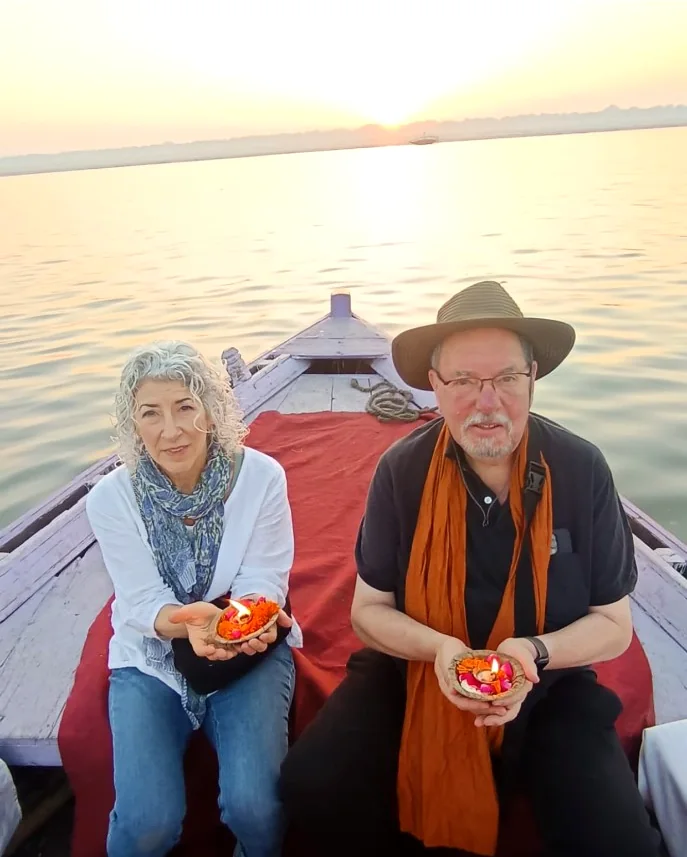
Our preferred sunrise route
For most first-time visitors, our preferred practical boarding point is Dashashwamedh Ghat. We aim to have guests at the ghat around 20 minutes before sunrise; the hotel departure time depends on where the guest is staying and the access conditions that morning.
From Dashashwamedh, the boat travels along the river towards Harishchandra Ghat, showing important ghats on the way. It then continues towards Manikarnika Ghat and Lalita Ghat. At Lalita Ghat we like to leave the boat and continue with a short guided walk through the old city, including the lanes around Kachauri Gali. This gives the guest the river and street perspectives as one continuous morning experience.
Why morning works so well
Before the city becomes busy, the river gives you a simple view of the ghats as one continuous landscape. You see pilgrims bathing, people exercising, priests beginning rituals, residents washing, boats moving and temples catching the first light.
Private or shared boat?
A private boat gives you more control over pace, route and photography. It is also easier for your guide to explain what you are seeing without competing with a larger group. For a premium private journey, this is normally our preference.
How long should you allow?
The exact duration depends on river conditions, boarding point and the section of ghats being covered. We prefer enough time to observe rather than racing from one named ghat to another. The boat ride often works best when followed by a short walk through the old city and then breakfast.
What to wear and bring
Mornings can be cool in winter. Wear a light layer and shoes that are easy to manage on steps. Keep valuables simple. Your guide will advise on the current boarding point and any local restrictions.
Mobility and boat boarding
The ghats do not have wheelchair ramps down to the river, so boat boarding needs to be planned carefully for elderly guests and travellers with limited mobility. We select the most practical access point available, arrange assistance at the steps and avoid treating the boat ride as automatically suitable for every guest.
Monsoon and high water
Boat operations are controlled by local conditions and administration rules. During high water, services can be limited or suspended. We never present a river activity as guaranteed when conditions make that impossible.
A second river experience
If you have two nights or more, consider seeing the river again in the evening. The Ganga Aarti is a very different experience and helps you understand why the river is both an everyday space and a sacred one.
The starting time is seasonal
A fixed 5:30 AM pickup is not correct for every month. In winter, sunrise is later and mornings can be misty; in summer, the river becomes active much earlier. We set the hotel pickup according to sunrise, hotel location and the current boarding point. Guests staying on the ghats may begin on foot, while those in Cantonment or Nadesar require a vehicle transfer before the final walk to the boat.
Boarding points can change
Dashashwamedh Ghat is our normal preference, but Varanasi is operationally dynamic. High water, monsoon restrictions, police controls or temporary river conditions can require a different boarding point. We therefore confirm the actual arrangement close to the activity rather than promising a fixed ghat regardless of conditions.
What makes a good private boatman and guide
A polished boat is useful, but reliability matters more. The boatman should arrive before the guest, carry the required safety equipment and understand the planned route. The guide should know when to explain and when to stay quiet. The most memorable sunrise trips are usually not the ones with the most facts; they are the ones where the guest has enough space to observe the ghats while still receiving the context needed to understand what is happening.
Plan breakfast after the old city, not before
For most first-time visitors, the natural sequence is boat first, then a short walk through the old city while it is still relatively calm, followed by breakfast back at the hotel. This avoids waking even earlier simply to eat before the river. It also gives the guide a chance to connect what you saw from the water with the temples, lanes and neighbourhood life behind the ghats.
The sunrise boat is only the first part of the experience.
After the private sunrise boat ride, we normally continue directly into an old-city walking tour rather than simply returning by boat to the starting point. Guests usually disembark at Manikarnika Ghat, where the guide sensitively explains the cremation rituals, the significance of the ghat and the Hindu understanding of death and liberation. We avoid this section completely for guests who do not wish to see or discuss a cremation ghat, and we discourage intrusive photography.
From there the walk continues through the old lanes towards the flower market at Chowk, the traditional perfume market, Kachori Gali — one of the old city's food streets — and the Kashi Vishwanath area and corridor. Guests who wish to enter Kashi Vishwanath Temple can ask us to arrange a skip-the-line darshan option in advance, wherever the official facility is operating; temple entry remains optional and is planned around the rules for the travel date. The guide then continues with the guests to the practical vehicle meeting point for the return to the hotel for breakfast and rest.
We use the river as the beginning of the morning, then connect it naturally with the lanes, markets and sacred geography behind the ghats.