For most of our guests, we prefer balcony viewing for the clearest overall view or Sankalp Aarti participation for a closer, more personal religious experience. Reserved chairs are useful for comfort and mobility. A boat gives a broad riverfront perspective but is often farther from the priests, may be blocked by other boats and does not always carry the chanting and atmosphere as strongly.
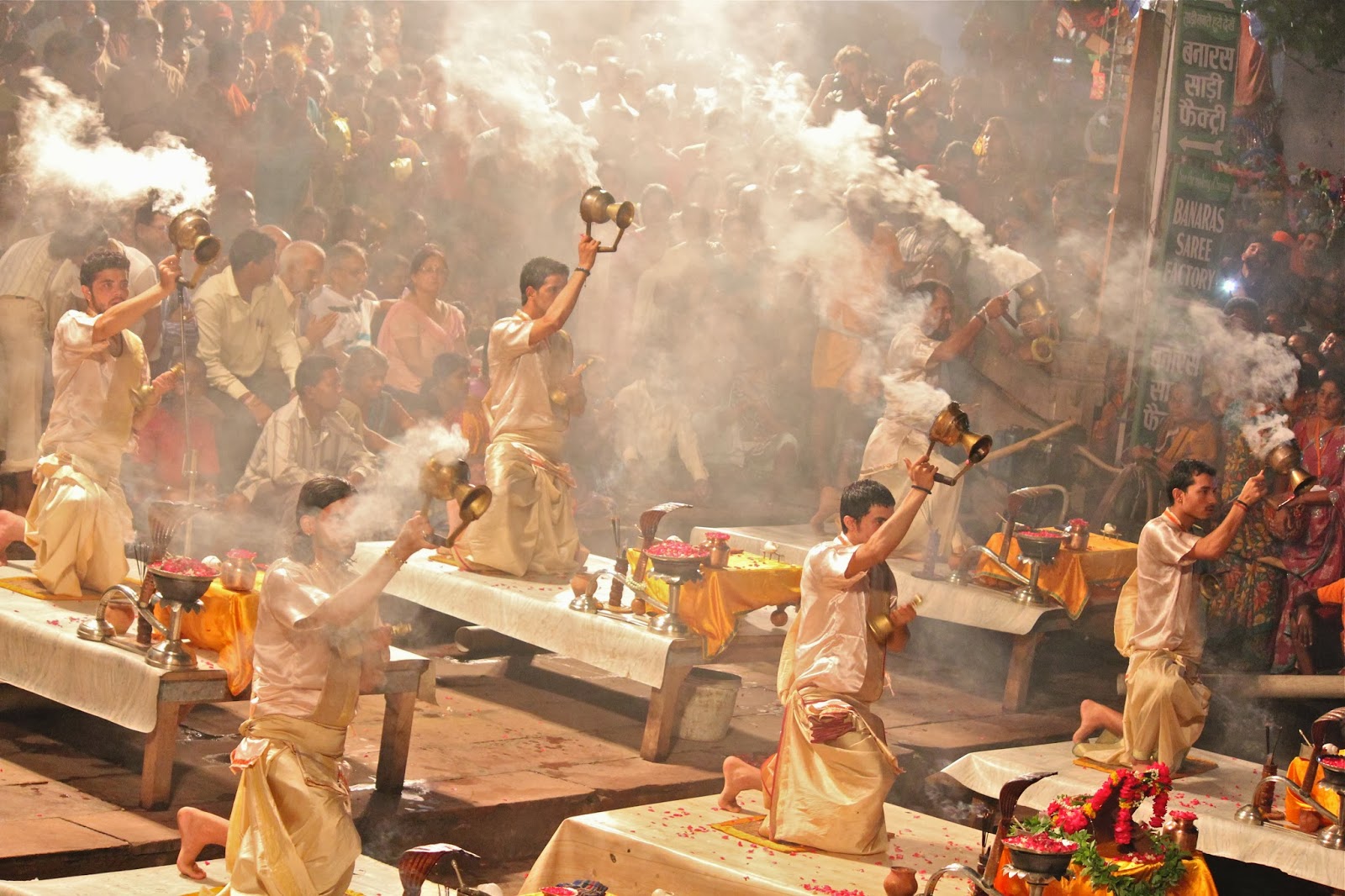
What is Aarti?
Aarti is a Hindu ritual in which light is offered during prayer. At the riverfront, priests use lamps, incense, bells and chanting in a public ceremony dedicated to the Ganges. It is a working religious ritual rather than a stage performance created for visitors.
Why we usually prefer a balcony to a boat
When a good balcony position is available, this is often the most balanced way to watch the ceremony. You are elevated above the crowd, the full formation of priests is visible and your line of sight is less likely to be interrupted. It is especially useful for first-time visitors who want to understand the scale and choreography of the Aarti without standing in a dense crowd.
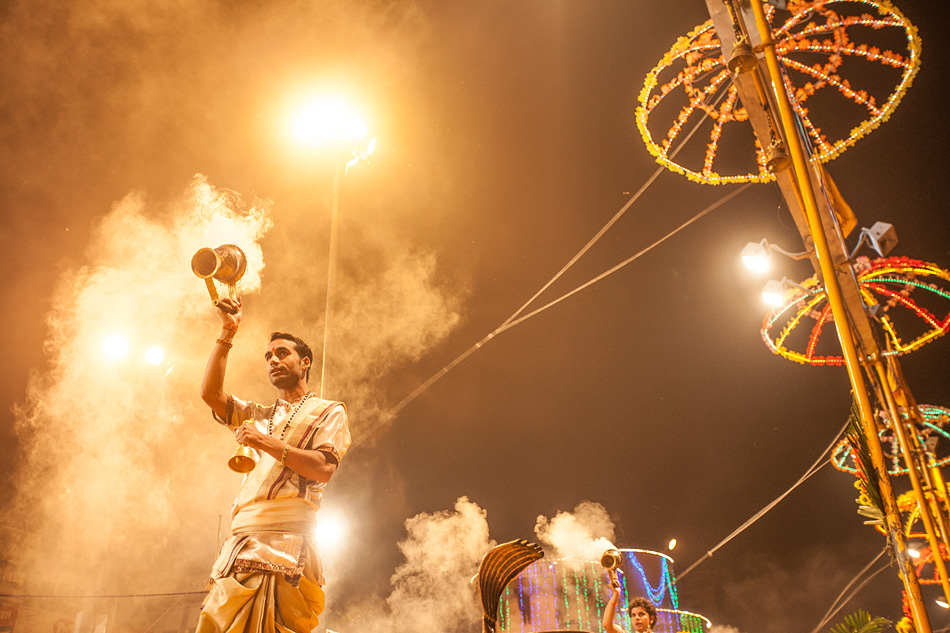
Sankalp Aarti: for guests who want to participate
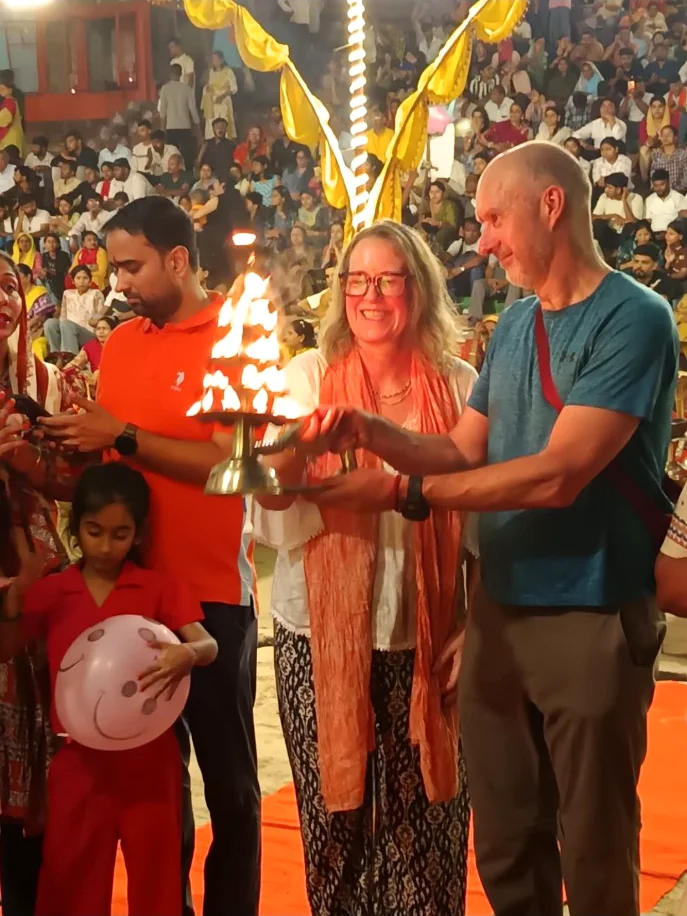
Sankalp Aarti is different from simply watching. Guests sit closer to the ritual and participate with guidance, making it a more personal spiritual experience. We particularly recommend it for travellers who are interested in the meaning of the ceremony and want to feel involved rather than treating Aarti as sightseeing.
Reserved chair seating
Reserved land-based chair seating is a practical option for senior travellers, families and guests who prefer a stable position without prolonged standing. It can also be a good alternative when a balcony is not available. The exact position varies, so we confirm the arrangement for the travel date rather than promising a generic “front row”.
Why we do not automatically recommend boat viewing
Watching from a boat can be atmospheric because you see the illuminated ghats from the Ganges. However, during Aarti the boats gather in rows. Your boat may end up farther from the priests than expected and another boat can partially obstruct the view. The chanting, bells and collective atmosphere also feel less immediate from the river. We therefore use boat viewing when the guest specifically prefers the river perspective, not as our automatic premium recommendation.
Getting there: expect traffic as well as walking
Do not judge Varanasi sightseeing travel time by the airport transfer. Traffic becomes much heavier around the old city, temple and Aarti approaches, and vehicles cannot always reach the point a guest expects from a map. We therefore build the approach time into the evening rather than treating the Aarti start time as the hotel departure time.
Depending on traffic controls and the guest's hotel, the final section may involve walking or local transport. For elderly guests we plan the closest practical drop point, rickshaw option and seating arrangement in advance.
If you are staying at BrijRama, Guleria Kothi or Taj Ganges Avantika
These hotels use their hotel jetty at Namo Ghat for arrival and departure. Their hotel-operated boat transfers between Namo Ghat and the property are complimentary and included in the hotel booking package. This is separate from an optional Aarti-viewing boat and should not be charged as an additional arrival/departure boat service.
Arrive with time to spare
If you do not have reserved seating, we recommend reaching the Aarti area at least one hour before the ceremony begins to have a reasonable chance of finding a good place. Busy festival periods can require even more time.
When we arrange reserved chairs, balcony viewing or Sankalp participation, the experience is more controlled and guests do not need to compete for a viewing position at the last moment. Even then, we allow enough approach time because traffic and pedestrian congestion can be significant.
Aarti timing changes with the season
Do not build a flight, train or tight dinner reservation around one fixed Aarti time copied from the internet. The ceremony timing varies with the season and special dates can change crowd-control arrangements. We reconfirm close to travel and keep enough time for the walk back to the vehicle.
Photography and etiquette
Photography and video are common, but we encourage guests to put the phone away for part of the ritual. During Sankalp participation especially, the experience is better when the focus is on the ceremony rather than continuous filming. Your guide can explain the sequence before it starts so a running commentary is not necessary.
Pair it with the old city
For a first visit, we like to approach the Aarti after a guided old-city or bazaar walk. The evening then becomes the natural conclusion to a journey through the living religious city rather than an isolated spectacle.