Published · Tour Varanasi Operations Team
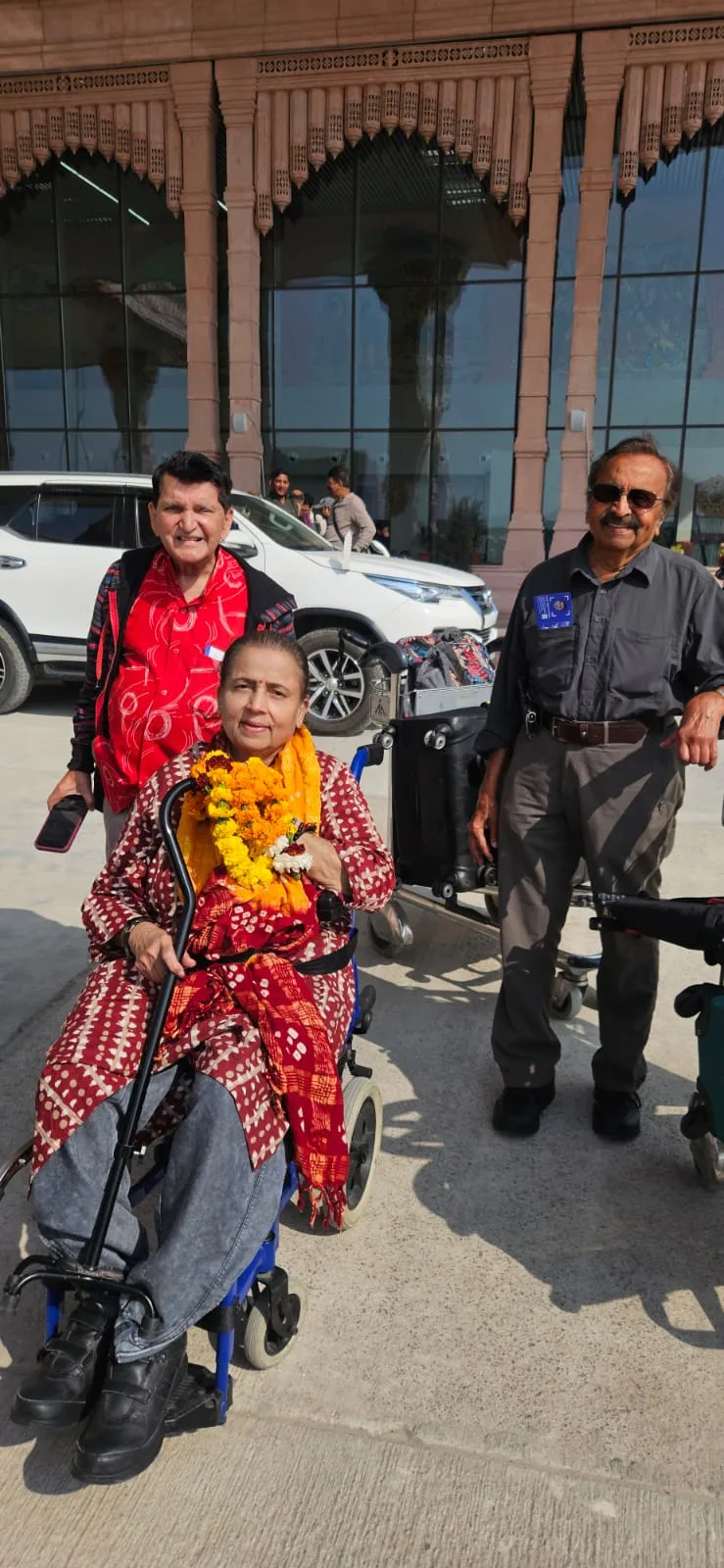
Planning a visit to Ayodhya with elderly parents or someone who finds walking difficult? One of the most useful arrangements to understand before travelling is wheelchair assistance—both for Ram Mandir darshan and for sightseeing around the city.
The questions usually begin with availability: “Will we get a wheelchair?” But the details that make the day comfortable are more specific. Where does the assistance begin? Who pushes the wheelchair? Does the arrangement include Ram Darbar? Will someone meet you at the next sightseeing stop?
Planning these details in advance can make a considerable difference. A comfortable visit depends on coordinating each part of the journey: suitable transport, a manageable approach, the appropriate temple assistance and enough time to rest.
Wheelchair assistance at Ram Mandir costs INR 200 per person for the basic Ram Mandir visit and is arranged offline at the designated counter. Staff assess whether the guest genuinely needs mobility assistance, photograph the guest’s identification document and then allocate a wheelchair with an assistant.
For sightseeing across Ayodhya, Tour Varanasi can arrange a separate wheelchair with assistance at INR 3,000 per day, per wheelchair. The assistant coordinates with your driver and reaches the agreed sightseeing locations independently in advance to meet the guest.
Wheelchair Assistance in Ayodhya: The Two Main Arrangements
A wheelchair provided for a temple visit should not be confused with a private wheelchair service for a day of sightseeing. These arrangements serve different purposes, and understanding how they connect is the starting point for a well-planned Ayodhya visit.
| Arrangement | Charges | What it covers |
|---|---|---|
| Ram Mandir wheelchair with assistance | INR 200 per person | Basic Ram Mandir visit; arranged offline following assessment and ID documentation. |
| Ram Darbar or additional temples inside the complex | Additional charges confirmed at the counter | Specify the complete route and settle applicable charges before starting. |
| Tour Varanasi private wheelchair with assistance | INR 3,000 per day, per wheelchair | Assistance at agreed sightseeing locations wherever wheelchair access is practical; arranged in advance. |
The temple arrangement is limited to the agreed visit inside the complex. It is not a full-day wheelchair service for Ayodhya city. The private daily service supports movement at different sightseeing locations. At Ram Mandir, the temple’s own wheelchair procedure still applies.
How Ram Mandir Wheelchair Booking Works
If you are searching for Ram Mandir wheelchair booking, the most important point is that this assistance is arranged offline, in person. Here is the practical sequence.
1. Reach the designated wheelchair assistance counter
Your driver or local guide can help you reach the appropriate approach or meeting point, taking account of the traffic arrangements operating that day. Allow time for the process. Arriving at the temple area does not mean the wheelchair has already been allocated.
2. Explain the guest’s walking difficulty
Staff assess whether the guest genuinely needs wheelchair assistance. Explain the difficulty clearly: the guest may be unable to walk, unable to manage the required distance, or unable to remain standing for the visit. Do not assume that age alone automatically secures a wheelchair.
3. Present the guest’s identification
Keep the guest’s identification document readily available. Staff take a photograph of the ID as part of the process before providing the wheelchair with assistance. Keep identification somewhere easy to reach rather than packed deep inside luggage or left at the hotel.
4. State the complete temple route
Before taking the wheelchair, explain whether the guest wants only the basic Ram Mandir visit or also wishes to visit Ram Darbar or other temples inside the complex. This is the stage to agree the scope of the visit and the relevant charges.
5. Pay the applicable charges and begin the visit
The basic wheelchair-with-assistance charge is INR 200 per person. If additional visits have been requested and agreed, settle their applicable charges at the outset. The wheelchair assistant can then follow the agreed programme.
Visiting Ram Darbar With a Wheelchair: Mention It Before Starting
The basic INR 200 wheelchair arrangement is for Ram Mandir only. It should not be assumed to include Ram Darbar or every other temple within the complex.
If these additional visits matter to your family, say so when requesting the wheelchair: “We would like to include Ram Darbar and the other permitted temples in addition to Ram Mandir. Please confirm the wheelchair route and total charges before we begin.”
Specify the places you want to visit, confirm what can be included under the day’s access arrangements and pay the agreed charges before starting. Leaving this conversation until partway through the visit can create confusion over the assistant’s assigned route and the services already paid for.
A family planning the journey for parents should discuss these preferences before reaching the counter. This allows the accompanying person to communicate the complete requirement clearly.
Is Online Wheelchair Booking Available for Ram Mandir?
The wheelchair process described here is completed offline at the temple, where staff assess the guest and document their identification.
An online darshan pass should not be treated as a confirmed wheelchair reservation. Likewise, booking a private car, guide or Ayodhya tour package does not automatically mean a temple wheelchair has been allocated.
Families searching for “Ayodhya Ram Mandir wheelchair booking online” should distinguish between a darshan service, a privately arranged sightseeing assistant and the temple wheelchair obtained through its offline procedure. You can discuss your requirements with us before travelling so the day is planned properly, while the temple allocation follows the procedure at the designated counter.
Private Wheelchair With Assistance in Ayodhya: INR 3,000 Per Day
Some guests need assistance beyond Ram Mandir. They may wish to visit several locations, spend time at the riverfront or avoid having their relatives organise a different wheelchair arrangement at each stop.
For these requirements, Tour Varanasi can arrange a private wheelchair with assistance in Ayodhya at INR 3,000 per day, per wheelchair. The service is organised around the agreed sightseeing programme.
The wheelchair assistant remains in contact with your driver, coordinates the next location and reaches the sightseeing point independently in advance. The assistant then meets the guest at the agreed accessible meeting point and provides wheelchair assistance for the visit.
The assistant does not need to occupy a seat in your sightseeing vehicle simply to move between the agreed locations. Instead, coordination with the driver helps bring the guest and assistant together where assistance is required.
For example, after completing one visit, the guest may continue by private vehicle while the assistant makes their own way to the next agreed stop. The driver and assistant communicate about arrival timing and the practical meeting point.
This arrangement is useful for families travelling with a parent who is comfortable sitting in a car but finds repeated walks around sightseeing locations tiring. The private daily service and the Ram Mandir counter arrangement are separate. Tell us the complete programme in advance so we can explain how assistance will work at each stage.
What a Wheelchair Assistant Does—and What to Discuss Separately
The assistant’s role is to provide the agreed mobility assistance and coordinate meeting points with the driver. If a guest needs help beyond pushing the wheelchair, explain those needs before booking. Getting into a vehicle, transferring between seats, personal care and washroom assistance should not be left to assumptions.
A wheelchair assistant is also different from a local tour guide. If you would like explanations of Ayodhya’s history, temples and traditions, a guide can be arranged separately. If a female attendant is specifically required, mention this at the enquiry stage so availability and duties can be checked.
Can You Take a Private Wheelchair Inside Ram Mandir?
Plan to use the wheelchair arrangement authorised by the temple inside Ram Mandir. Do not assume that a wheelchair hired privately for city sightseeing can continue through the temple entrance. Your local assistance should be coordinated around the temple’s own procedure.
This is especially important for travellers who use a personal wheelchair throughout the day. If the guest cannot comfortably transfer to another chair, explain this before travel so the applicable temple arrangements can be checked for their circumstances.
For families booking our daily assistance, we will explain the planned meeting points and how the private service connects with the temple visit. The aim is to avoid an unexpected gap in support between leaving the vehicle, obtaining the temple wheelchair and returning after darshan.
Can Family Members Accompany the Wheelchair User?
Families naturally want to remain together during Ram Mandir darshan. However, the wheelchair arrangement should not be understood as automatic access to the assisted route for an entire group. Confirm the accompanying-person arrangement at the counter when the wheelchair is allocated.
Choose the family member who will accompany the guest wherever permitted. This person should understand the guest’s needs, carry the required identification and know which visits have been requested. If the rest of the family follows a different route, agree where everyone will meet afterwards. Your guide or coordinator can explain the sequence before the group separates.
Getting From Your Hotel to the Temple Area
A private car is useful for comfortable hotel transfers, but the final approach can involve more than one form of transport. Vehicle access depends on local traffic restrictions and permitted drop-off points. An e-rickshaw may be needed for part of the approach, followed by wheelchair assistance where arranged.
When planning Ram Mandir darshan for senior citizens, consider the complete journey: hotel room, hotel entrance, private vehicle, permitted drop-off, wheelchair counter, darshan and the return meeting point. Each stage should work for the guest.
Ask whether the guest can manage the step into the proposed vehicle. If an e-rickshaw is required, consider whether transferring onto its seat is practical. A vehicle that can carry a folded wheelchair is not necessarily designed for someone to travel while seated in it.
How Much Walking Will the Guest Need to Do?
The walking requirement depends on the day’s drop-off arrangements, the chosen route and where assistance begins. Instead of asking only whether a wheelchair is available, ask: “Where will the assistant meet us, and is there any walking between the vehicle and that point?”
For guests who cannot walk at all, even a short gap matters. For someone who can manage a little walking, avoiding repeated long approaches may be enough to make the day comfortable. Describe walking ability practically: “My mother can walk a short distance but cannot stand for long,” or “My father needs a wheelchair from the vehicle onward.”
Which Other Ayodhya Visits Should You Include?
A well-planned wheelchair-assisted visit should focus on the places the guest most wants to see, with practical access assessed individually.
Ram Mandir and Ram Darbar
Make these the main focus if they are the reason for the journey. Agree the full temple route when obtaining the wheelchair and leave enough time afterwards for rest.
Hanuman Garhi
Hanuman Garhi involves a stair approach and should not be treated as an ordinary wheelchair stop. Discuss it separately if the guest cannot manage steps. A wheelchair assistant’s presence does not make every staircase accessible. The family may decide to omit this visit for the guest or arrange for other members to visit separately.
Kanak Bhawan and other temples
Ask about the actual approach, thresholds and steps before including a temple. Avoid assuming that the entire route is accessible simply because a wheelchair can reach the surrounding area.
Ram Ki Paidi and Saryu Aarti
An evening visit can be a pleasant part of the programme when the approach, viewing position and return arrangements suit the guest. Choose a practical place to sit or remain with the wheelchair. There is no need to descend every flight of riverfront steps to enjoy the atmosphere.
A Practical Two-Night Ayodhya Programme
Day 1: Arrival in Ayodhya
Meet on arrival and transfer privately to the hotel. Keep the remainder of the day for check-in, meals and rest. Confirm the next day’s programme, identification requirements and wheelchair meeting arrangements. Overnight in Ayodhya.
Day 2: Ram Mandir darshan and selected sightseeing
Travel to the permitted drop-off point and proceed according to the agreed assistance plan. At the temple counter, complete the assessment and ID process, specify Ram Darbar or any additional internal temple visits, and pay the applicable wheelchair charges before starting.
Return to the hotel for lunch and rest. If the guest feels comfortable, include a short evening outing to Ram Ki Paidi or Saryu Aarti. For a privately booked wheelchair service, the assistant coordinates the agreed meeting point with your driver. Overnight in Ayodhya.
Day 3: Departure
After breakfast, transfer to the airport or railway station according to the confirmed schedule. Keep the day for departure rather than adding another time-sensitive visit. Guests wishing to explore more of Ayodhya can add another night.
Choosing a Suitable Hotel
For wheelchair users, the hotel’s practical access matters as much as its location. Check the route from the vehicle to reception, lift access, room doorway, bathroom entrance and space beside the bed. Confirm whether there are steps before the lift or at the main entrance.
A hotel described as near Ram Mandir may still require a difficult approach. A slightly more distant property with convenient vehicle access may work better. Share essential requirements before booking. If a particular bathroom layout or doorway width is necessary, ask for specific confirmation rather than relying on a general description such as senior-friendly.
Frequently Asked Questions
What are the wheelchair charges at Ayodhya Ram Mandir?
The current basic charge is INR 200 per person for Ram Mandir, including assistance. Ram Darbar or other internal temple visits must be specified when taking the wheelchair, with applicable additional charges agreed and paid before starting.
Is Ram Mandir wheelchair booking done online or offline?
It is completed offline at the designated counter. Staff assess the guest’s need, photograph their identification document and then allocate the wheelchair with assistance.
Does every senior citizen automatically receive a wheelchair?
Staff assess whether the guest genuinely needs mobility assistance. Explain the walking difficulty clearly rather than assuming that age alone guarantees allocation.
Is Ram Darbar included in the INR 200 arrangement?
The basic arrangement is for Ram Mandir only. State any additional internal temple visits before taking the wheelchair and settle the relevant charges at that time.
Can Tour Varanasi arrange a wheelchair with an assistant for sightseeing?
Yes. We can arrange assistance at INR 3,000 per day, per wheelchair for the agreed programme. The assistant coordinates with your driver and reaches the sightseeing locations independently in advance to meet the guest.
Does the assistant travel in our car?
For this daily sightseeing arrangement, the assistant makes their own way to the agreed locations and coordinates directly with your driver. Confirm the programme and meeting points with us before the day begins.
Does the private service replace the temple arrangement?
No. Ram Mandir follows its own procedure. The private daily service supports the agreed sightseeing arrangements outside that temple-controlled process.
Arrange Your Ayodhya Visit With Tour Varanasi
A comfortable visit begins with a clear plan: the places you wish to see, the support the guest needs and the point at which assistance should begin. Tour Varanasi can coordinate private transport, a local guide, hotel arrangements and wheelchair assistance in Ayodhya, with sightseeing built around the guest’s pace.
Send your travel dates, number of guests, arrival and departure details, and a brief explanation of the assistance required. Mention whether you wish to include Ram Darbar and other temples inside the complex, so this is addressed before the wheelchair is taken.
Private wheelchair with assistance: INR 3,000 per day, per wheelchair.
Email: tours@tourvaranasi.com
Call or WhatsApp: +91 7457905011
Combining destinations? See our Varanasi guide for senior citizens and Varanasi, Prayagraj and Ayodhya planning guide.
Temple procedures and charges reflect current local operating information as of 2 October 2026 and remain subject to changes by the administration. Your travel-date arrangements will be reconfirmed during planning.
Plan your private Ayodhya visit
Share your dates, interests and preferred pace for a personalised programme and itemised quotation.