Varanasi is unforgettable, but it can feel intense on a first visit. A little practical planning makes a very big difference.
Do not try to see everything
For most first-time visitors, two or three days is a good starting point. The city works better when you allow time for an early river morning, breakfast, a rest period and a second outing later in the day. Trying to fill every hour usually makes Varanasi harder, not better.
Expect to walk
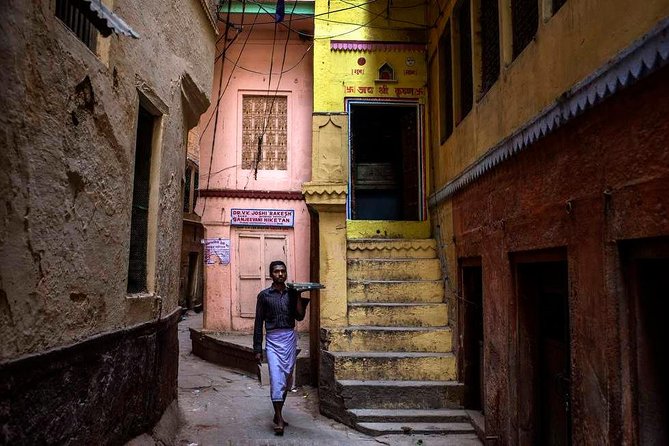
Cars cannot reach every part of old Varanasi. The lanes around the ghats and major temples often require walking, and surfaces can be uneven. Comfortable shoes matter more than formal clothing. If mobility is a concern, tell us before travel so the day can be planned around shorter walks and sensible drop-off points.
Dress simply and respectfully
There is no need to dress like a pilgrim. Light, comfortable clothing that covers shoulders and knees works well for most religious areas. Shoes are removed at many temples. Your guide will explain local customs as you go.
Temples have their own rules
Security and access procedures can change. At Kashi Vishwanath, electronic gadgets are not allowed inside the temple premises according to the temple’s official guidance, so lockers and timing need to be planned properly. We confirm the current procedure close to your visit rather than relying on old online advice.
See the river twice if you can
Sunrise and evening feel completely different. Morning is quieter and shows everyday river life. Evening brings the Ganga Aarti, larger crowds and a more ceremonial atmosphere. If your stay allows, we recommend experiencing both.
Cremation ghats require sensitivity
Cremation is part of public religious life in Varanasi, especially around Manikarnika and Harishchandra ghats. A good guide can explain the traditions without turning the area into a spectacle. Photography of cremations should not be treated as a tourist activity.
A private guide is especially useful here
Varanasi is one of those cities where context matters. A guide can explain what you are seeing, help with local access and change the pace when the city becomes crowded. For a first visit, that support is often more valuable than adding more sightseeing.
Build the day around Varanasi’s natural rhythm
A practical first day usually works better in two parts. We often start very early for the river and old city, return to the hotel for breakfast and a proper rest, then go out again in the late afternoon for a walk or the evening Aarti. That break is not wasted time: after a pre-dawn start, temple security and walking through crowded lanes, most guests enjoy the evening much more if they have had time to reset. In summer the same split also avoids the hottest part of the day.
Keep expectations realistic around access
The most important thing to understand is that the car cannot follow you everywhere. Godowlia, the ghats, Kashi Vishwanath approaches and many old-city lanes operate with changing barricades and pedestrian zones. Your driver may drop you some distance away and meet you later at another point. We brief the driver and guide together so the guest is not left trying to find a vehicle after a temple visit or Aarti. For senior travellers, this small operational detail makes a very large difference.
What to tell us before arrival
Tell us if you have knee trouble, dislike very early mornings, want serious photography time, are travelling with children, or have a particular religious interest. Those details change the itinerary more than simply telling us that you want to see the top attractions. We would rather remove one stop and make the remaining experiences comfortable than produce an impressive-looking list that becomes exhausting on the ground.