One Day in Lumbini from Maya Devi Temple to the Monastic Zone
A one-day Lumbini itinerary for the Buddha’s birthplace in Nepal, with Maya Devi Temple, the Ashoka Pillar, the sacred pond and a choice of monasteries.
Published · Tour Varanasi Operations Team
If you have one day in Lumbini, start at the Maya Devi Temple and the Sacred Garden, take a proper break, then choose a small part of the Monastic Zone for the afternoon. The two areas answer different questions. The Sacred Garden helps you understand why pilgrims have come to this place for centuries. The monasteries show how Buddhist communities from different countries express their traditions today. Trying to see every monastery by lunchtime leaves little opportunity to appreciate either experience.
Before entering the Maya Devi Temple, ask your guide to orient you outside. Locate the temple, the Ashoka Pillar and the sacred pond so that you know how the three relate to one another. This takes only a few minutes and gives the interior visit a clear purpose. Inside, look for the marker stone associated with the traditional birthplace of the Buddha, the nativity sculpture and the archaeological remains. Leave room for worshippers to pause and follow the direction of movement indicated locally.
A useful question to ask your guide is how an archaeologist, a historian and a pilgrim might each read this place. The surviving brickwork gives clues to earlier structures. The inscription on the pillar records Emperor Ashoka’s visit and identifies Lumbini with the Buddha’s birth. For a devotee, the time spent standing quietly near the shrine may matter more than either explanation. Agree in advance whether your party would like historical interpretation, time for prayer or both. A considerate guide can give an explanation outside and meet the group again afterwards.
After the temple, make a slow circuit of the pillar and the Pushkarini, the sacred pond. From the water, look back at the temple building. This wider view helps place the remains you have just seen inside. Find a quiet spot where your group can sit without obstructing a path. A few minutes spent listening to pilgrims or watching the movement around the garden is often more memorable than another photograph taken on the way to a waiting vehicle.
For a family, turn the grounds into a simple exercise in looking. Ask each person to identify one object that carries a story. A child may choose the pillar because it is easy to recognise. Another traveller might remember the line of brick foundations or the pond beside the shrine. Compare what you noticed over lunch. If someone wants a second look, make that choice while you are still in the Sacred Garden area, before travelling on to the monasteries.
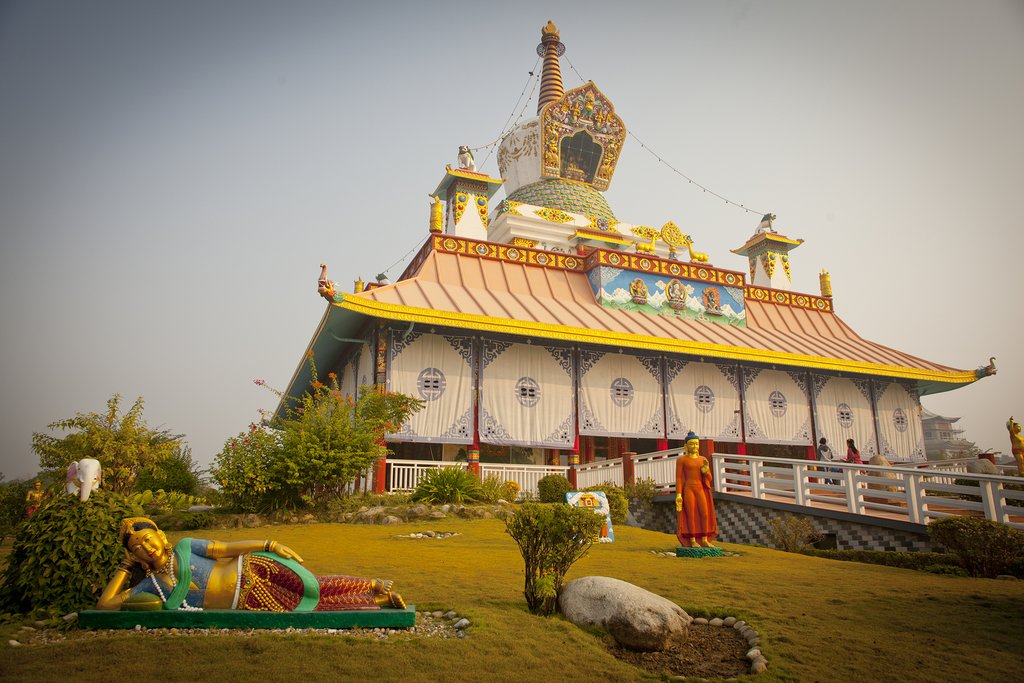
The Lumbini master plan places the East and West Monastic Zones in relation to the central canal. Read a current site map with your guide before choosing stops. The eastern zone is associated with Theravada communities, while the western zone includes monasteries of Mahayana and Vajrayana traditions. For a first visit, pick one monastery you particularly want to enter and a second nearby. Allow time to find the entrance, put footwear where requested and see whether visitors can enter the prayer hall that day.
Choose by interest as much as appearance. Someone interested in architecture may prefer to compare rooflines, courtyards and the approach to the main hall. A pilgrim may want a quiet place to sit or a monastery connected with a tradition they practise at home. If a service is in progress, ask where visitors are welcome to stand. Photography arrangements can differ between neighbouring monasteries. A courtyard open to visitors does not automatically make an occupied prayer hall a place for filming.
The word “garden” can lead visitors to picture a compact park. The distances across the wider development area add up, especially when you include the walk from a drop point to a doorway and back again. A local rickshaw can cover the longer connections where permitted. Agree the stops, the waiting arrangement and the final pickup point before setting out. Save a photo of the site map or carry a paper copy so a change of plan is easy to explain.
If travelling with a parent who tires easily, ask about the distance from the permitted drop point to Maya Devi Temple, places to sit, and the surface between the entrance and the shrine. Check the same details for the particular monastery you have chosen. The two approaches need separate answers. On a warm afternoon, a seated break and one unrushed monastery visit are a sensible use of the day. Carry only what current entry rules allow and arrange a place for bags before you reach the entrance.
With a half day, spend it at the Sacred Garden and add a single monastery only if the pace feels comfortable. For a full day, use the morning for Maya Devi, the pillar and pond, and return to a hotel or restaurant for lunch. Put your selected monasteries in the afternoon. Ask the hotel or visitor information centre about opening that morning. A monastery may be closed to visitors for a private observance even when the surrounding public paths remain open.
An overnight stay is particularly helpful if you are arriving from Kushinagar by road. Border formalities, vehicle arrangements and the hour of arrival can vary between travellers. Put the main temple visit the next morning if an afternoon arrival would leave you watching the clock. For planning the journey between the two pilgrimage sites, see our Kushinagar to Lumbini travel guide. Give your local team the onward flight or train details before agreeing how long the last monastery stop can be.
When you send an enquiry, put your available time in plain terms. “We reach the hotel after lunch and leave by ten the next morning” is more useful than “one night in Lumbini.” Mention whether you have already visited Bodh Gaya or Sarnath. A guide can then connect the birthplace with the other places on your route, while still giving Lumbini the time its own story deserves. For a mixed group, ask which stops everyone can enjoy together and where a shorter route can rejoin the others.
For site background and the monuments within the Sacred Garden, consult the Lumbini Development Trust. Reconfirm ticket arrangements, access and the return meeting point for your actual visit. If you are tracing the pilgrimage route from India, our seven-day Buddhist circuit through Bodh Gaya, Kushinagar and Lumbini shows where the Nepal stop fits. For the best use of that final morning, tell us which matters more to you, time at the birthplace or a longer visit to the monastic communities.
Use Varanasi and Sarnath as the natural starting point for the major Buddhist sites of Bihar and beyond.