Treat Kushinagar–Lumbini as an international road sector, not just another intercity transfer. Border procedures, vehicle arrangements and passport formalities can add time, so keep the day light and avoid placing a fixed flight connection immediately after the crossing.
Kushinagar and Lumbini form one of the most important transitions on the Buddhist circuit: from the place associated with the Buddha’s Mahaparinirvana in India to his birthplace in Nepal. The route is straightforward when planned properly, but the international border makes timing less predictable than an ordinary domestic drive.
Start with Kushinagar
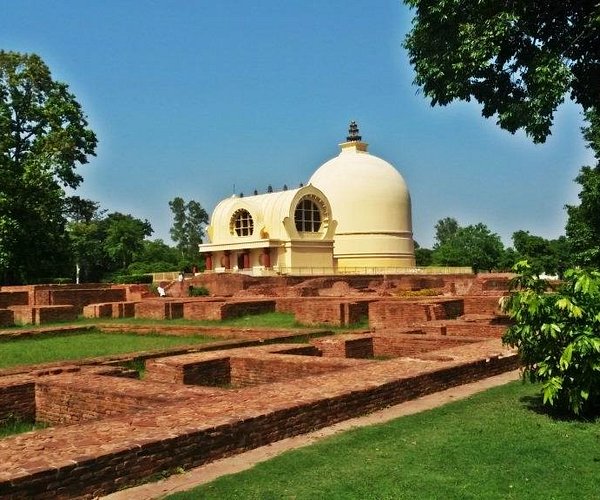
Kushinagar is one of the four great Buddhist pilgrimage places traditionally connected with the Buddha’s life. It is associated with his Mahaparinirvana—the final passing away—and therefore carries a tone very different from the intensity of Bodh Gaya or the broad archaeological landscape of Nalanda. The town is relatively small, and its principal sites can be visited in a few hours, but that does not mean the stop should be reduced to a quick highway break. The Mahaparinirvana Temple, the Nirvana Stupa and Ramabhar Stupa form a clear narrative sequence: final illness and passing, reverence around the reclining Buddha, and the cremation traditions associated with Ramabhar. For Buddhist travellers, an overnight gives the visit a quieter rhythm and avoids stacking a long road sector on both sides of the same day.
Continue with Lumbini
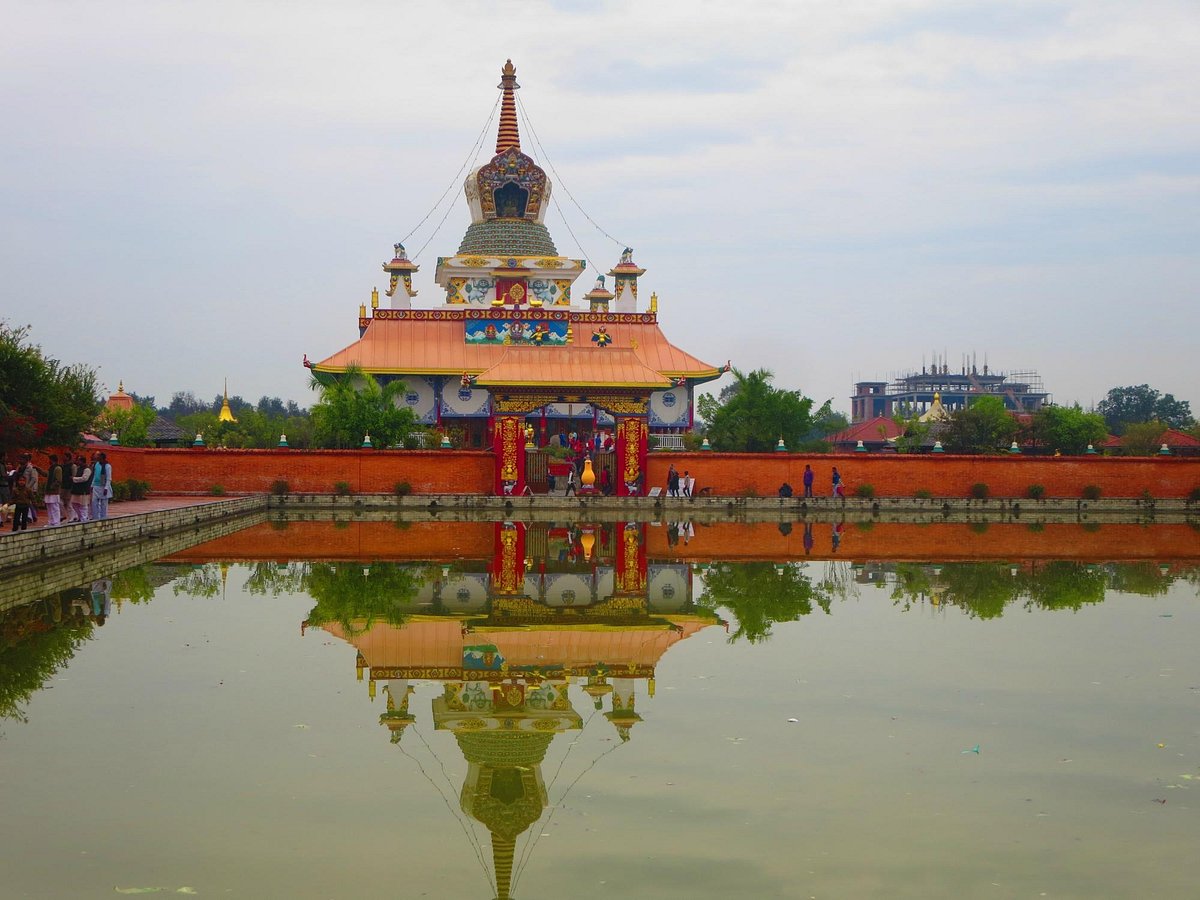
Lumbini lies in Nepal’s Terai and is revered as the birthplace of Siddhartha Gautama, the historical Buddha. The sacred area is a UNESCO World Heritage Site and is organised on a much larger scale than many first-time visitors expect. At its heart is the Sacred Garden containing the Maya Devi Temple, archaeological remains, the Ashoka Pillar and the Puskarini sacred pond. Extending beyond this core is an international monastic zone developed according to a master plan, with monasteries built by Buddhist communities from many countries. The result is not a compact town-centre temple visit but a broad pilgrimage landscape that benefits from deliberate transport and pacing. One full sightseeing day is appropriate; two nights makes the India–Nepal border crossing and the sacred visit considerably more comfortable.
Kushinagar: Mahaparinirvana Temple
The Mahaparinirvana Temple is the most important pilgrimage stop in Kushinagar and houses the celebrated reclining Buddha image. The posture represents the Buddha at the time of final passing and naturally creates a reflective atmosphere inside the shrine. Groups may be chanting or meditating, so visitors should allow silence and avoid treating the temple as a quick photo opportunity. The surrounding complex is relatively easy to walk and can be visited comfortably by mature travellers. We give the temple the largest share of time in Kushinagar and let other sites follow its rhythm.
Kushinagar: Nirvana Stupa & Sacred Grounds
The Nirvana Stupa stands close to the Mahaparinirvana Temple and forms part of the same sacred archaeological landscape. Together, the shrine, stupa and gardens help visitors understand why Kushinagar is associated with the Buddha’s final days. The landscaped setting allows a slower walk and is suitable for quiet meditation when groups are not too large. Archaeological interpretation is useful because the visible structures have passed through excavation and restoration phases. We normally keep this as one continuous visit with the temple rather than separating it into multiple artificial sightseeing stops.
Lumbini: Maya Devi Temple
The Maya Devi Temple is the spiritual and archaeological heart of Lumbini and protects the nativity site associated with the Buddha’s birth. Excavations have revealed structural remains and a marker stone that are central to the site’s interpretation. The atmosphere inside is quiet, and visitor flow may be controlled to protect the archaeology. Photography rules can differ between interior and exterior areas, so current instructions should be followed rather than assumed. We give the temple enough time for both guided explanation and personal reflection before continuing through the Sacred Garden.
Lumbini: Ashoka Pillar
The Ashoka Pillar near the Maya Devi Temple records the Mauryan emperor’s pilgrimage to Lumbini and identifies the sacred birthplace. Its inscription is one of the most important historical pieces of evidence linking the ancient site with later Buddhist pilgrimage. The pillar is best understood in relation to the temple and surrounding archaeological remains rather than as a separate monument. A guide can explain what the inscription represents without turning the stop into a long lecture. Because it stands within the Sacred Garden, we visit it as part of one continuous walking sequence.
Practical planning notes
We do not build this journey around fixed internet timings copied months in advance. Temple procedures, monument openings, traffic controls, road conditions and local access can change. The sensible approach is to confirm the important operating details close to travel, keep enough buffer around the most important visit, and avoid adding another major stop simply because it appears close on a map.
For senior travellers or anyone with limited mobility, tell us before travel rather than after arrival. We can shorten walking sections, choose more practical hotel locations, place rest time between outings and avoid combining several physically demanding visits in one block. Private transport is valuable, but in India’s sacred and heritage districts the final approach is often still pedestrian-controlled.
Plan this journey privately
Share your dates, interests and preferred pace. We will suggest a practical private programme rather than a generic sightseeing checklist.