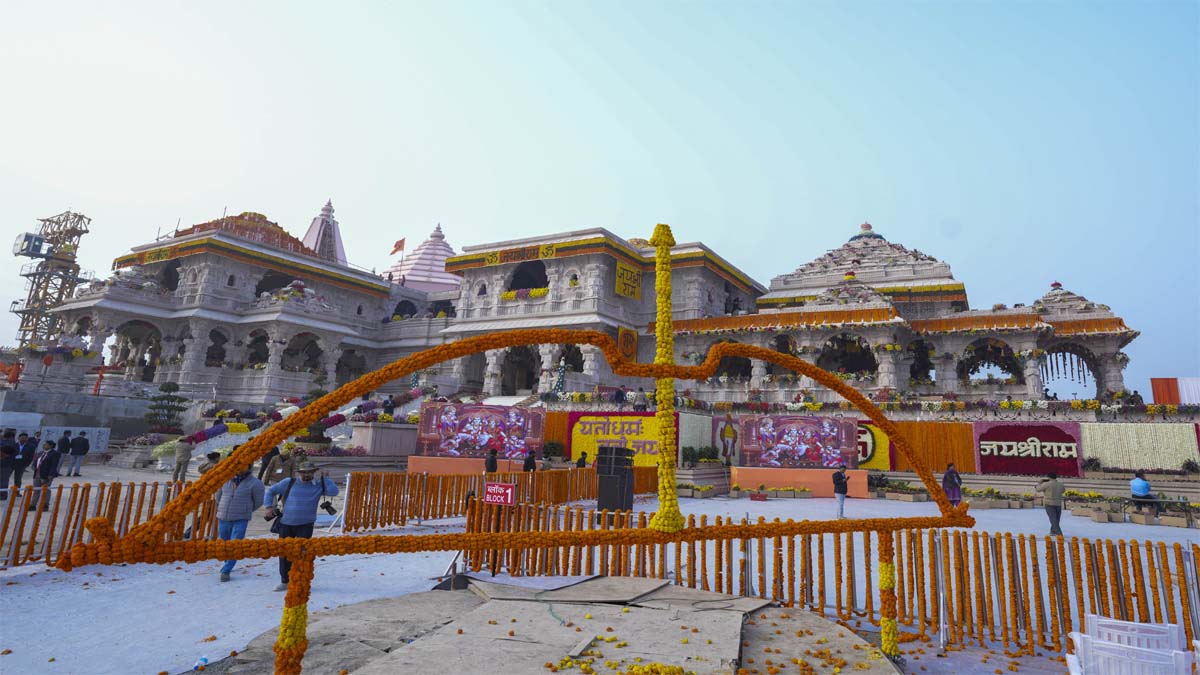
Ayodhya Ram Mandir Darshan Guide for First-Time Visitors
Plan Ram Lalla darshan in Ayodhya, from choosing a pass and reaching the entrance to arranging a wheelchair, a family meeting point and time for aarti.
Published · Tour Varanasi Operations Team
If seeing Ram Lalla is the reason your family is coming to Ayodhya, give darshan the first place in the itinerary. Choose your morning or afternoon around the temple visit, then fit Hanuman Garhi, Kanak Bhawan and the river around it. A common planning mistake is to measure the journey from the hotel to the temple pin on a map. Your car reaches a permitted drop point. The rest of the journey includes the local approach, putting belongings away, security, the queue and the walk back to a place where your driver can collect you.
Start with a simple question for everyone travelling. Does the family want to see Ram Lalla together, attend a particular aarti, or spend longer visiting shrines around the complex? Those are different requests. Someone who wants a few quiet moments at the temple may be quite content with ordinary darshan. A devotee who has travelled specifically for an aarti needs to check the arrangements for that ceremony before choosing trains or committing to a morning excursion.
The Trust has announced General Darshan and Sugam Darshan pass arrangements with different routes through the complex. Akashvani’s report on the announcement lists Ram Lalla and Ram Parivar on both routes and different additional shrines on each. Read the description attached to the option available on your date. If one particular shrine matters to your family, check that it is on that route. The word “Sugam” alone tells you very little about walking distance, steps, the length of the queue or the assistance a particular visitor will need.
Use the Shri Ram Janmabhoomi Teerth Kshetra booking portal for the options released for your date. Check the spelling of every traveller’s name against the identification they will carry. Read the instructions for the chosen service, including reporting time, identity documents and number of people covered. For an extended family, look at every confirmation separately. Two successful bookings can still leave grandparents and grandchildren with different reporting times.
Keep a paper copy of the confirmation and the contact number for your local representative. Do this while you have a reliable connection at the hotel. A pass on a relative’s phone is awkward when the relative is walking in another group or has already deposited the device. If you are visiting without an advance slot, ask about that day’s general arrangements before leaving. Leave space in the programme for the answer to change your departure time.
Ask your driver to name the drop point before the journey begins. In the temple area, traffic controls can change which streets a vehicle can reach. A local e-rickshaw can be useful for part of the approach. There will still be walking and security checks. Get a description of where the ride ends and where your guide or representative will meet you. “At the temple” is too imprecise in a busy pedestrian area with several entrances and a stream of returning pilgrims.
At the hotel, empty the bag you normally carry on sightseeing days. Take only the identification, confirmation and essentials permitted under the current entry instructions. Ask where to leave phones, footwear and larger belongings. Agree on a meeting landmark before anyone deposits a phone. A family can move at different speeds through a checkpoint even when it arrives together. A named counter or sign on the way out is much easier to find than a remembered turn in a crowded lane.
Plan for the return trip as carefully as the approach. A parent may feel comfortable walking to darshan after breakfast and find the same stretch tiring after standing in line. Tell your planner how long the traveller can stand, whether they manage steps and whether they can transfer between a car, an e-rickshaw and a wheelchair. Those details are more useful than age alone. They also help establish whether someone should stay alongside that traveller while the rest of the family continues.
Before confirming, ask where any wheelchair is collected, how far the attendant can accompany your guest and who meets them after darshan. Support inside the temple and a wheelchair arranged for the whole sightseeing day cover different parts of the journey. Our Ayodhya wheelchair assistance guide explains those arrangements. A good accessible visit might finish with lunch and a rest. Hanuman Garhi can wait for another outing if the family has already had its most important experience.
For a morning slot, have breakfast according to your own devotional practice and the hotel’s service time, then go directly to the agreed drop point. Leave the period after darshan open for collecting belongings and finding the car. If everyone is comfortable, continue to Kanak Bhawan. If someone is tired or the queue has run long, return to the hotel. A flexible lunch reservation works better here than a table booked against an optimistic exit time.
For an afternoon visit, avoid squeezing in a long excursion beforehand. A short local outing with a clear return time is easier to manage. The banks of the Saryu make a different kind of evening after the temple. Choose whether you want to watch the river, sit for aarti or arrange Deep Daan. The Ram ki Paidi evening guide covers the practical differences. Allow time between the temple exit and the riverside meeting point.
A private quotation should let you see what your money covers. Ask for the vehicle, local representative, e-rickshaw, wheelchair support and any other assistance to be identified separately. Check which items cover one person, one vehicle or the whole family. A guide can explain the route, help coordinate the approach and tell your driver when you emerge. The Trust controls entry and the movement of pilgrims. Treat any promise of a guaranteed queue time with care.
If you are deciding between a day trip and a night in Ayodhya, work backwards from your onward train or flight. Allow time to return to the hotel for luggage and reach the station or airport after temple traffic. A night in town gives a family more room to absorb a changed slot. Compare our private two-day Ayodhya tour with the one-day Ayodhya programme. When enquiring, give the arrival time, departure time, group size and the one act of worship you most want to protect.
Choose a route that gives Varanasi, Prayagraj and Ayodhya enough time instead of turning them into rushed transit stops.