Food is one of the easiest ways to understand Banaras, but there is no need to spend the whole day eating.
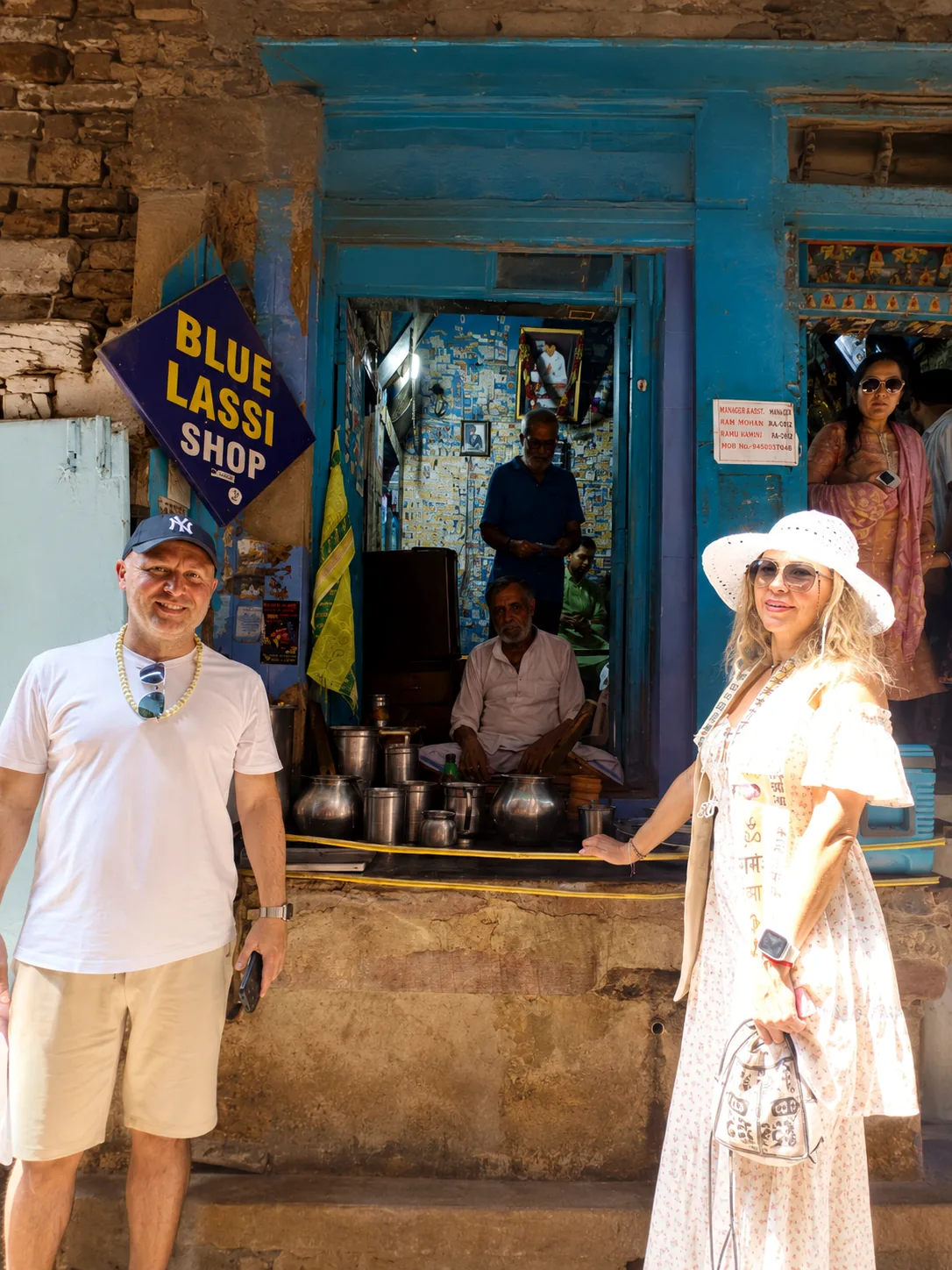
Start with small tastings
A good food walk is about variety and context, not quantity. We prefer several small tastings with time to understand where a dish comes from and why a particular lane or market is known for it.
Kachori-sabzi
A classic local breakfast. Crisp kachori is served with a spiced vegetable preparation and is best tried at a busy, established shop where turnover is high.
Tamatar chaat
Varanasi’s tomato chaat is rich, warm and quite different from the colder chaat styles many travellers know from other Indian cities. It is a useful reminder that Indian street food changes dramatically from place to place.
Lassi and sweets
Lassi, rabri and traditional sweets are easy additions to an old-city walk. Seasonal malaiyo, when available in the cooler months, is one of the city’s more distinctive sweet experiences.
Banarasi paan
Paan is strongly associated with Banaras. It is usually taken after a meal. Your guide can explain the ingredients and help you choose a mild version if you are curious.
Food safety for international travellers
Choose busy places with good turnover, drink sealed or safely filtered water and avoid trying too many rich foods at once. A private guide is useful because the best stop for a guest is not always the most famous name on social media.
Make food part of the day
We normally add a food walk to a two- or three-day stay rather than building the entire itinerary around eating. That keeps the experience enjoyable and leaves time for the river, Sarnath and the old city.
Travellers who want to participate rather than only taste can choose our Banarasi Home Cooking & Local Family Experience, where the emphasis is on everyday home-style food, conversation and sharing the finished meal.
A good food walk should feel curated, not competitive
The aim is not to eat the largest number of famous dishes in the shortest time. We normally choose a small route where the stalls make sense together and where the guide can explain the neighbourhood as well as the food. Portions are deliberately kept small. This lets guests taste more than one thing without feeling uncomfortable, especially after a day that may already have started before sunrise.
Timing changes what is available
Some breakfast items are best in the morning, while chaat and sweets fit more naturally into the late afternoon or evening. Seasonal items such as malaiyo are not available throughout the year. We therefore do not advertise an identical tasting list for every date. The guide checks what is fresh and operating that day and substitutes sensibly when a particular shop or seasonal item is unavailable.
Hygiene is about judgement, not avoiding all street food
For international travellers, we prefer busy vendors with high turnover, freshly cooked hot food and a visible preparation area. We avoid raw garnishes or water-based items where there is unnecessary risk, and we carry bottled water. Guests with sensitive stomachs should say so before the walk. There is no prize for trying something that makes the next day’s sunrise programme miserable.
Vegetarian travellers have an advantage here
Much of the classic food of old Varanasi is vegetarian, so a vegetarian guest does not need a reduced version of the experience. Vegan requirements need a little more planning because ghee, milk and curd appear frequently in sweets and snacks. Food allergies should be explained clearly in advance; in a traditional small shop, cross-contact cannot always be controlled to the standard of a specialist restaurant.
Combine food with local storytelling
The strongest walks connect a dish to the street, festival, community or time of day in which it belongs. A guide can also help distinguish between a genuinely old local habit and something that has simply become popular with tourists. That context is why we prefer a guided small-group or private tasting rather than sending guests a list of ten shops to find on their own.