A Lucknow Food Walk Through Chowk and Aminabad
What to order at Tunday Kababi, Raheem’s, Idris and Prakash Kulfi, plus a vegetarian breakfast alternative and a practical route between the two markets.
Published · Tour Varanasi Operations Team
In Lucknow, the difference between a good food walk and a very large dinner is how you order at the first counter. Start with one shared plate. At Akbari Gate in Chowk, a soft galouti kebab and a piece of fresh bread introduce one side of Awadhi cooking. Nearby, a bowl of nihari with kulcha gives you a second, quite different taste. If there is room for dessert, make Prakash Kulfi in Aminabad a separate stop. Tell the driver which neighbourhood you want to finish in before anyone leaves the car.
Ask your guide to send the name of the shop, its branch and a landmark where you can stand without blocking a shopfront. Tunday Kababi has more than one outlet. Saying “meet at Tunday” can send two people to different parts of Lucknow. For this version of the walk, use the Akbari Gate branch in Chowk. For a meal arranged around seating and particular meat preferences, discuss the Aminabad branch before committing to the Chowk route.
Keep the Chowk section on foot and treat Aminabad as a second neighbourhood. The two markets look close when you are looking at a city map over breakfast. After weaving around customers, stopping to see a cook work and waiting for everyone to finish a tasting, an additional walk can feel quite different. A family with a grandparent can enjoy the same food by making fewer stops and arranging a short transfer between markets.
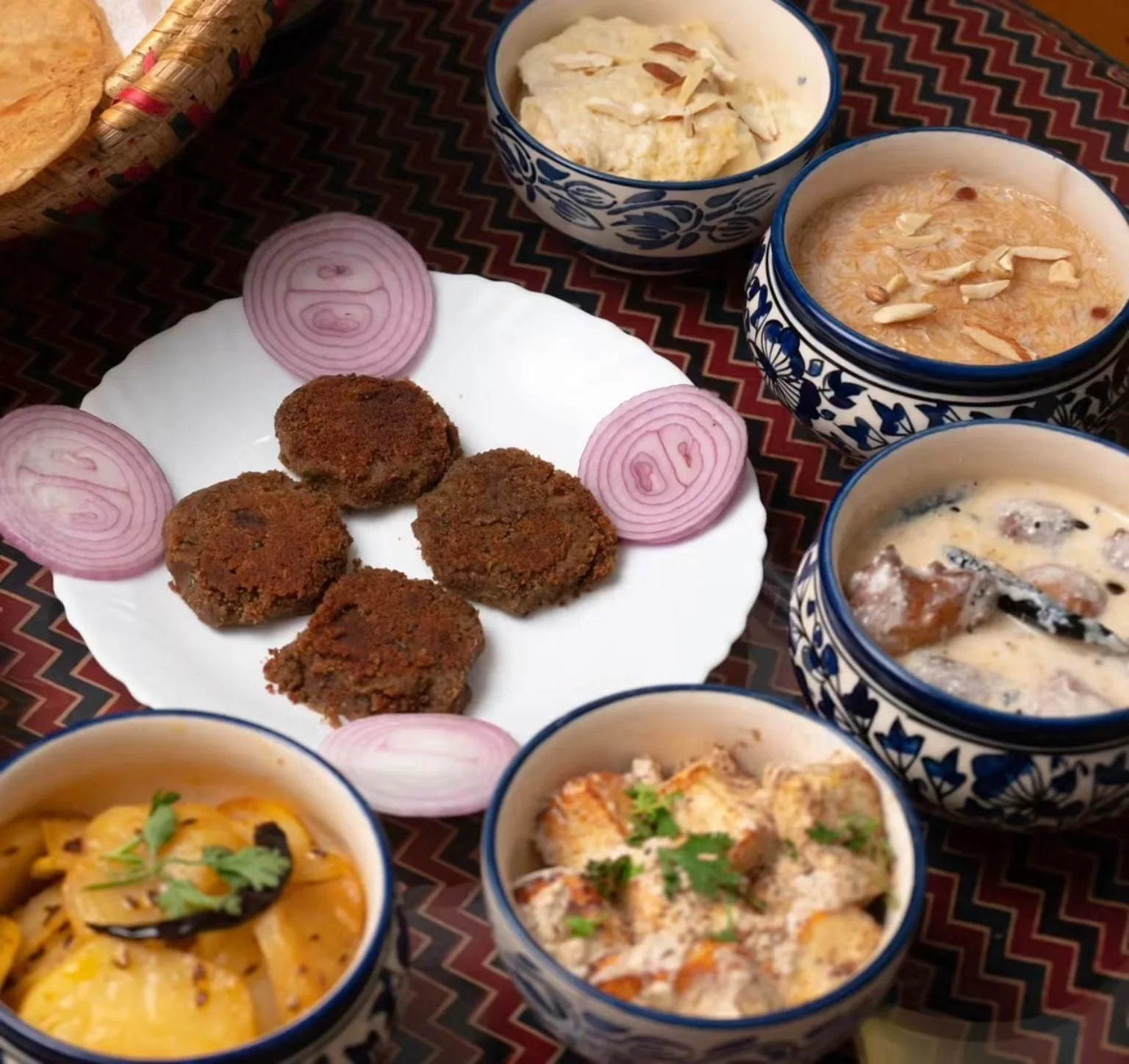
Order a small portion of galouti kebabs and bread for the table. Watch the cook turn the patties on the broad hot pan. The browned surface gives way to a finely minced centre soft enough to break with the edge of a piece of bread. Taste the first bite plain. Then try another with onion or the accompaniment supplied that day. Sharing here leaves space to appreciate a stew at the next stop instead of trying two rich dishes at the end of a full meal.
Ask specifically what meat the branch is serving. Incredible India distinguishes the original Chowk counter from the Aminabad outlet in its guide to the city’s food. If someone eats mutton but avoids other meats, tell the guide before setting out and have the order confirmed at the counter. A mixed group can still watch the kebabs being made and then sit down elsewhere. Nobody needs to order a dish simply because the group has visited a famous address.
Around Akbari Gate, ask for Raheem’s and order kulcha with nihari. This stop is about the bread as much as the slow-cooked meat gravy. Tear off one piece and taste the crust first. Dip the next piece into the gravy and notice how the soft centre takes it up. Two guests who have just shared kebabs can begin with a single bowl and ask for another bread if they need it. Check that day’s serving and whether the dish you want is ready.
A walk built around nihari works best when the shop sets the timing. Have your guide call ahead if Raheem’s is the main reason for your visit. During festivals or a busy service, the time when a dish is ready and the time when a group can sit down may be quite different. If you would rather spend longer over this meal, finish the savoury walk here and take the biryani recommendation away for another day.
If rice is the dish you came for, choose Idris Hotel for mutton biryani and drop one of the earlier meat courses. Ask whether a fresh batch is available, how large a portion is and whether the group will eat there or take it away. Taste the rice before adding anything. Notice the difference between the fragrance carried by the grains and the stronger flavour of the meat. This is a far better use of an appetite than ordering a full plate at all three shops.
For two people with different tastes, plan the walk around a shared bread tasting and one individual main dish each. For six or eight travellers, appoint one person to place each order with the guide. Ask the counter whether it can supply smaller plates or divide the order before everyone presses forward. The shops are working kitchens serving regular customers. Give cooks room to turn a pan or lift a pot, and ask before filming at close range.
Save the sweet stop for Prakash Ki Mashoor Kulfi in Aminabad. Ask for kesariya badam pista kulfi with falooda if available. Kulfi is a dense milk-based frozen dessert. The soft strands of falooda give a spoonful a very different texture from the firm kulfi beneath. A small shared portion is a comfortable finish after kebabs or nihari. Anyone avoiding milk, almonds or pistachios should check the ingredients before ordering, even if the group asks for the topping to be left off.
If you want a vegetarian morning instead, ask about Rattilal’s for khasta kachori with aloo or chana and finish with jalebi when available. This is a different outing with a different rhythm. You are following breakfast service and the frying pan, so an early start matters more than reaching a famous kebab counter. For strict dietary requirements, tell the guide how you feel about shared utensils, oil and preparation areas. The individual kitchen is the place to confirm what it can accommodate.
For a first visit, reserve about two to three hours as a planning allowance for Chowk, with extra time for a transfer and dessert in Aminabad. Let the guide know whether your priority is food photography, a seated meal, a particular dish or a gentle walking pace. Those choices determine which stops to keep. Shop opening, batch availability, seating and prices can change. Ask for the day’s route, number of tastings and what the quoted walk includes before setting out.
Our Chowk food and chikankari guide is useful if part of the family would like to meet an embroidery maker. For a food-focused visit, keep that appointment separate so neither the cook nor the craftsperson has to hurry. The two-day Lucknow tour leaves room for the Imambaras on one outing and the markets on another. For more dishes and established city addresses, see Incredible India’s Lucknow food guide.
Choose a route that gives Varanasi, Prayagraj and Ayodhya enough time instead of turning them into rushed transit stops.