Vrindavan is one of India’s most intensely devotional temple towns. Associated with Krishna’s youth and the traditions of Radha-Krishna bhakti, it contains hundreds of temples, ashrams and sacred groves within a relatively small urban area. The apparent closeness of the temples can be misleading: worship schedules, pedestrian lanes, crowd barriers and festival traffic determine how much can actually be visited in a day. This is why we resist the common package-tour promise of covering every famous temple in a few hours. A better visit identifies three or four important temples, leaves space for the lanes and Yamuna, and uses a local guide who understands when a route should be changed. Vrindavan pairs naturally with Mathura, but it deserves a separate half day at minimum and ideally its own evening.
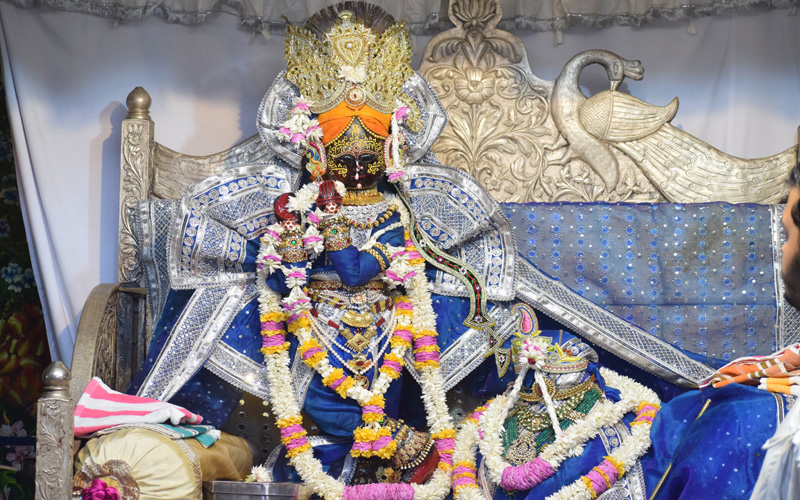
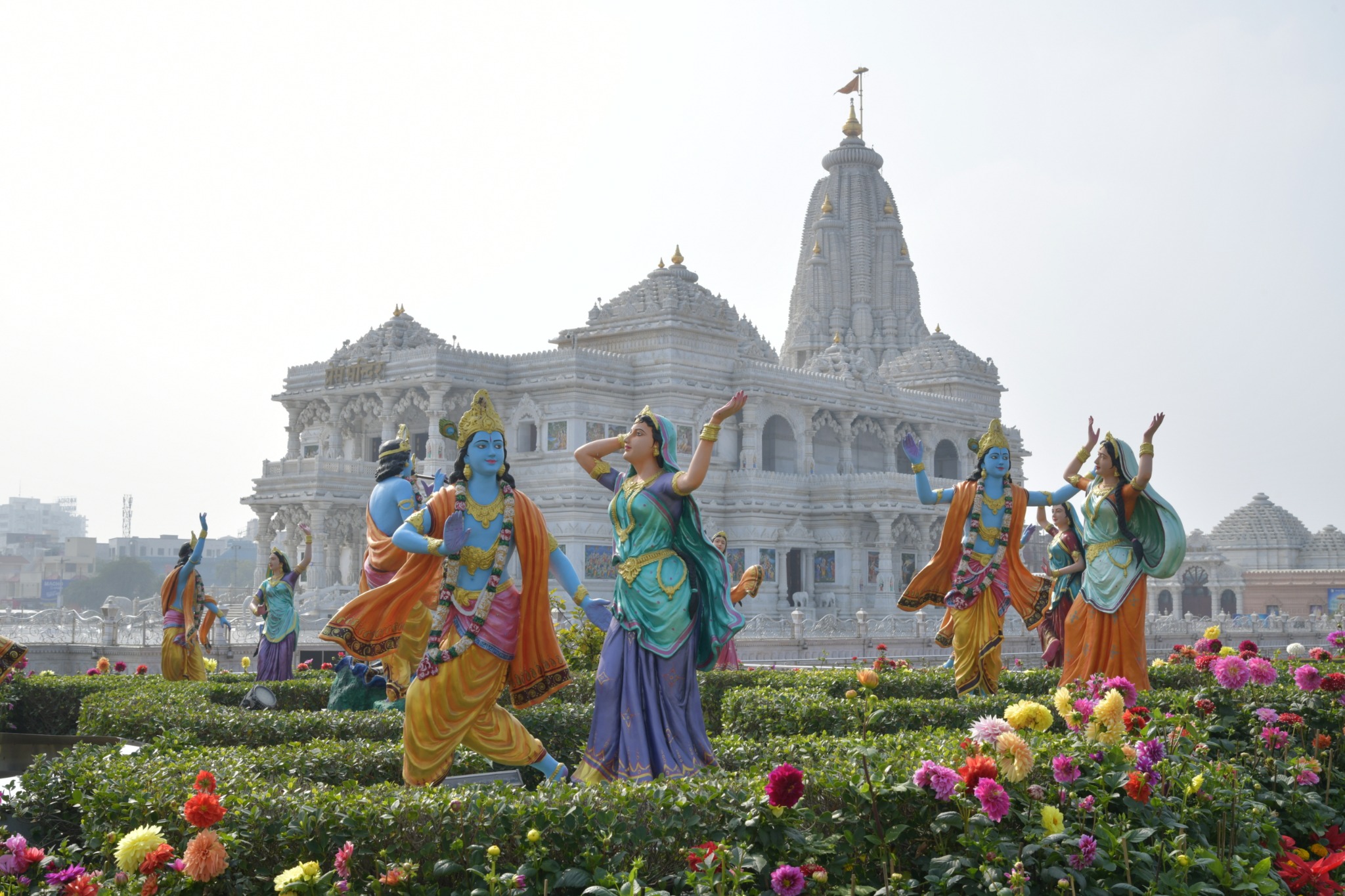
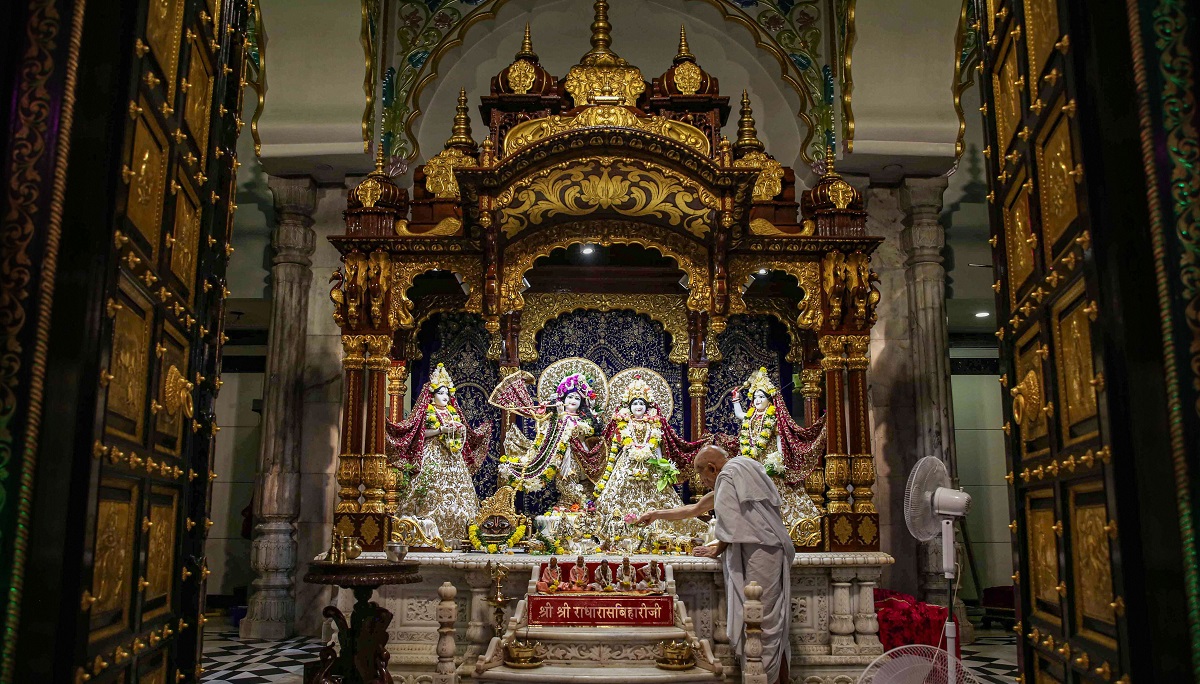
Banke Bihari Temple is the emotional centre for many visitors. Darshan is famous for its intensity, and the temple can become extremely crowded on weekends, festivals and special devotional dates. The lanes around it are narrow and vehicle access is limited, so guests should expect a pedestrian approach. ISKCON’s Krishna Balaram Mandir is physically easier to visit and introduces a different modern international dimension of Vrindavan devotion. Prem Mandir, with its large illuminated complex, is often best scheduled in the late afternoon or evening. Radha Raman Temple, smaller and older in atmosphere, offers another contrasting experience. Trying to see all four consecutively without breaks can make the day feel more like queue management than pilgrimage.
Nidhivan and Seva Kunj are associated with powerful local traditions concerning Krishna and Radha’s divine play. They should be approached respectfully, with attention to local opening rules and the explanations of a knowledgeable guide. Keshi Ghat on the Yamuna is one of Vrindavan’s most evocative historic riverfront settings and works well when combined with a short old-town walk. Yamuna aarti may be seen at selected ghats, but timing and local organisation vary. The river here is a different experience from the broad Ganges at Varanasi; it is more intimate and closely woven into the Krishna landscape of Braj.
The wider Braj region expands beyond Vrindavan to Mathura, Govardhan, Barsana, Nandgaon, Gokul and Mahavan. Four-day Braj packages sold in the market commonly cover these places, but for an international private traveller we usually prioritise depth and comfort. One night in Mathura or Vrindavan gives a useful taste; two nights allows proper morning and evening temple time; three nights makes Govardhan or Barsana realistic without excessive driving. Vrindavan also sits conveniently between Delhi and Agra, making it easy to combine with the Taj Mahal before continuing east towards Ayodhya. During Holi and Janmashtami, however, ordinary travel assumptions no longer apply—roads, temple queues and accommodation demand change dramatically, so the itinerary should be designed specifically for the festival.
Best forKrishna devotion · temple culture
Suggested stay1–2 nights with Mathura
Typical paceCrowded lanes + temple schedules
Planning stylePrivate & flexible