Uttar Pradesh · Ganges

Varanasi

A living sacred city best understood from the river, the ghats and the lanes behind them.

About this destination

Understanding Varanasi before you arrive.

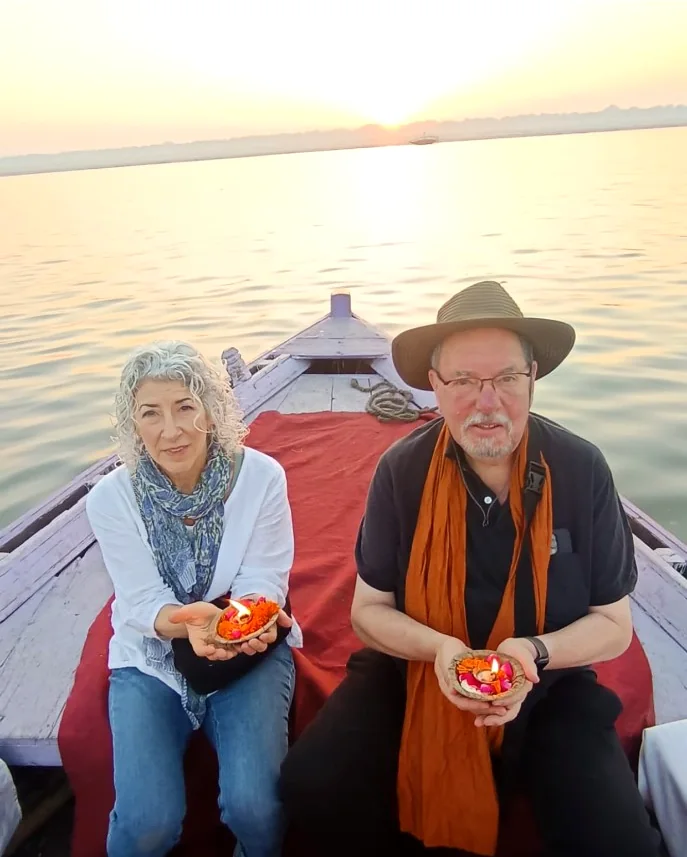
Varanasi is not a city that reveals itself through a checklist. It is one of India’s oldest continuously inhabited urban centres and, for Hindu pilgrims, one of the country’s most sacred places, yet what makes a visit memorable is the way ritual, commerce, scholarship, music, food and ordinary neighbourhood life occupy the same narrow geography. The Ganges is the organising line of the city. At dawn, boats move past bathing ghats, priests prepare small shrines, residents exercise, pilgrims perform rites and the old riverfront slowly changes colour. A private sunrise boat is therefore not simply a scenic excursion; it is the clearest introduction to how the city functions. We normally combine it with a short walk on the ghats rather than trying to cover the entire riverfront in one morning.

The old city behind the ghats is equally important. Around Vishwanath Gali and the lanes leading to Kashi Vishwanath Temple, streets are narrow, crowded and often inaccessible to vehicles. The experience is stronger when guests know in advance that walking, security checks and footwear arrangements are part of the visit. Kashi Vishwanath is one of the twelve Jyotirlinga shrines dedicated to Shiva, and the surrounding corridor has made movement easier than it once was, but local crowd controls can still change rapidly on festival days and auspicious dates. We plan temple time realistically and never promise an access arrangement that depends on changing local rules. For travellers who want a gentler temple experience, the southern part of the city offers Sankat Mochan, the New Vishwanath Temple inside Banaras Hindu University and other sites with a very different atmosphere.

Varanasi is also an essential stop for Buddhist travellers because Sarnath lies just outside the main city. Here the Buddha is traditionally understood to have delivered his first sermon after enlightenment. Dhamek Stupa, the archaeological remains, Chaukhandi Stupa and Mulagandha Kuti Vihara can be visited in a half day, but the quality of the visit depends more on interpretation than speed. The archaeological museum has its own operating days and timings, so we keep the route flexible. This combination of Hindu sacred geography in Varanasi and Buddhist history in Sarnath is one reason the city works so naturally as the beginning or end of a longer Buddhist circuit through Bodh Gaya, Rajgir, Nalanda, Kushinagar and Lumbini.

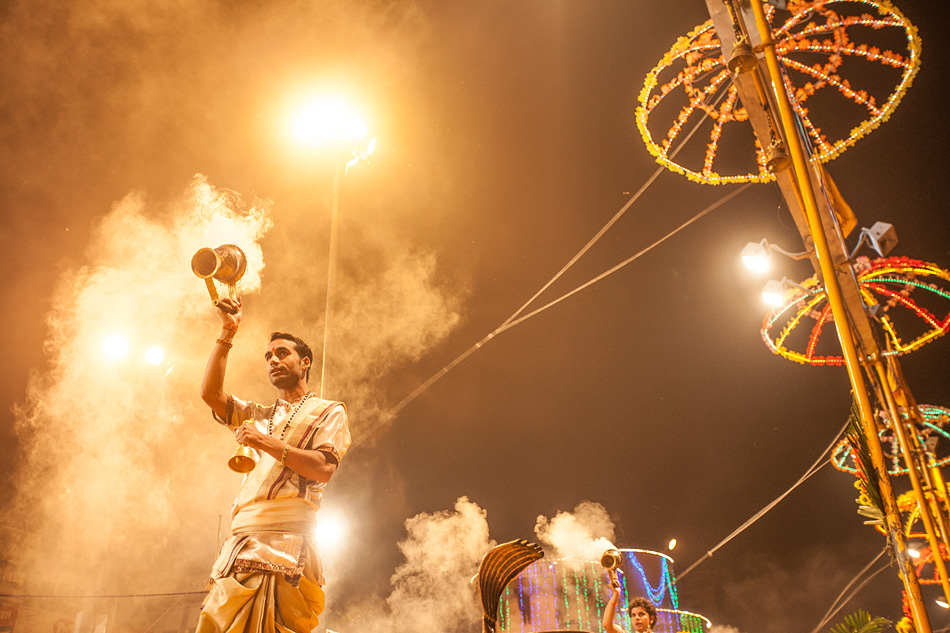
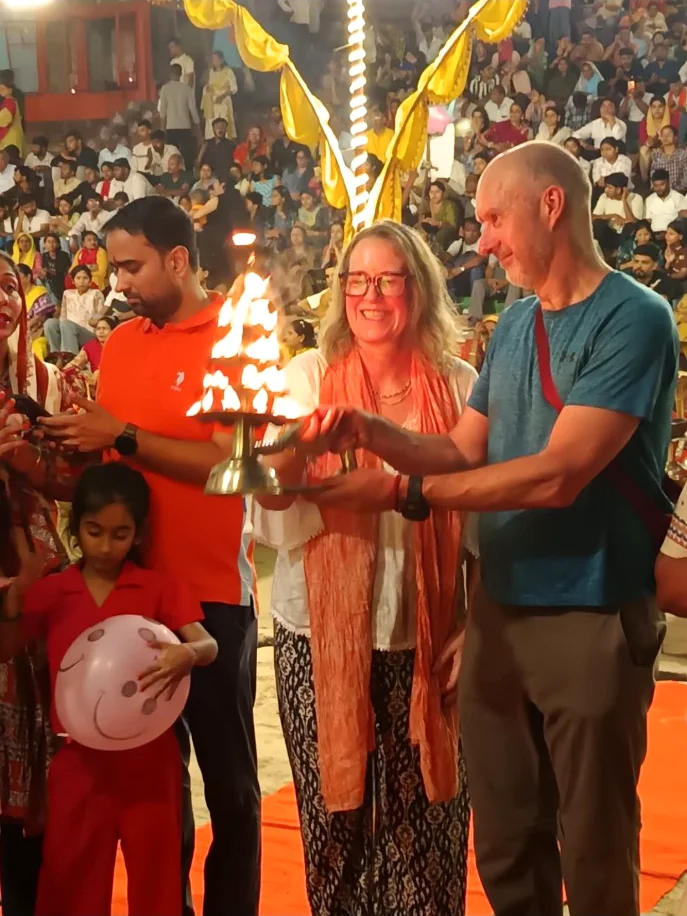
Beyond the headline monuments, we encourage visitors to leave room for one experience that feels personal: a food walk, a visit to a Banarasi silk workshop, a classical music interaction, a northern bazaar walk or simply time to sit beside the river. Evening Ganga Aarti is visually powerful, but the best viewing arrangement depends on season, river conditions and crowd controls; sometimes reserved seating on land is more comfortable than a boat. During monsoon periods, boat operations can be suspended by the authorities at short notice. Varanasi rewards travellers who accept that the city is dynamic and allow the programme to be adjusted on the ground. Two nights gives a useful introduction, three nights is more comfortable, and four allows the city to be experienced without compressing every morning and evening into sightseeing.

Best forSpirituality · culture · first-time India
Suggested stay2–4 nights
Typical paceEarly starts + walking
Planning stylePrivate & flexible
What to see

Places that are genuinely worth your time.

We describe these in practical terms because opening hours, local security, worship schedules, weather and crowd controls can affect the order on the day.

01

The Ganges, Ghats & Sunrise Boat

The river is the most revealing way to understand Varanasi and we normally begin before sunrise, when the ghats are active but the heat and traffic are still low. A private boat gives a continuous view of the riverfront and helps guests see how different ghats serve different religious, residential and everyday functions. We usually add a short walk after landing so the experience is not only seen from the water. Boat operations are controlled locally and can be suspended during high water, monsoon conditions or major events, so we always keep a land-based alternative. The goal is not to race from Assi to every named ghat, but to give enough context that the riverfront begins to make sense.

02

Kashi Vishwanath Temple & Old City

Kashi Vishwanath is one of the twelve Jyotirlinga shrines and is the spiritual centre of many visits to Varanasi. Reaching it usually involves walking through a busy pedestrian zone, passing security and leaving prohibited items in approved lockers before entry. A good guide is useful not merely for history but for navigating entrances, timing and changing local controls. The adjoining old-city lanes add another layer, with shrines, shops, residences and traditional businesses packed into a very small area. We plan this visit around the guest’s comfort and do not advertise guaranteed priority access because temple procedures can change.

03

Sarnath

Sarnath is where the Buddha is traditionally believed to have delivered his first sermon, making it one of the key Buddhist pilgrimage sites of India. Dhamek Stupa is the visual focus, but the archaeological remains around it are what help a guide explain the early monastic settlement. Chaukhandi Stupa and Mulagandha Kuti Vihara add different historical and devotional layers to the visit. The archaeological museum is valuable when open, particularly for travellers interested in sculpture and Mauryan art, but it has separate closing rules from the main site. We normally allow a half day rather than squeezing Sarnath into an already full temple morning.

04

Southern Varanasi: Sankat Mochan, BHU & New Vishwanath

The southern side of Varanasi provides a useful contrast to the density of the old city. Sankat Mochan Temple is an important Hanuman shrine and is best approached with awareness of local security and rules on personal belongings. Banaras Hindu University has a broad, green campus that changes the visual rhythm of the day after the crowded lanes. The New Vishwanath Temple within the campus is open to visitors of different faiths and is easier to experience at a relaxed pace. Depending on interests, Bharat Kala Bhavan or Bharat Mata Temple can be added, but we prefer not to overload the afternoon simply because the sites are geographically close.

05

Ganga Aarti & Evening Varanasi

The evening Ganga Aarti at Dashashwamedh Ghat is one of the city’s best-known rituals and draws large crowds through much of the year. The ceremony is more enjoyable when the viewing position is decided in advance instead of trying to reach the front at the last moment. Depending on river conditions and guest mobility, we may recommend reserved chairs, a suitable balcony, or a boat when boats are permitted. Festival days and peak pilgrimage periods can change approach routes, traffic barriers and the time needed to leave the riverfront. We therefore build buffer time around the evening and avoid scheduling another fixed activity immediately afterwards.

06

Banarasi Silk, Food & Neighbourhood Life

Varanasi’s identity is not limited to temples, and a private journey becomes richer when one local craft or neighbourhood experience is included. Banarasi silk weaving can be explored through a carefully chosen workshop where the emphasis is on technique and artisan knowledge rather than a compulsory shopping stop. A food walk can introduce kachori, chaat, sweets, lassi and seasonal specialities while avoiding the pressure to taste everything at once. Bazaar walks show how religious tourism and everyday commerce coexist in the same lanes. These experiences are arranged according to guest interest and comfort, and they are most rewarding when given proper time rather than inserted as ten-minute photo opportunities.

On-ground planning: We verify the practical sequence close to travel. Temple procedures, museum closing days, ropeways, river operations and local vehicle restrictions can change, particularly on festival and pilgrimage dates.
Journeys including Varanasi

Itineraries where Varanasi fits naturally.

These are starting points, not rigid packages. We can slow them down, remove hotels, change the arrival city or quote only transport and guides.

Plan Varanasi

Tell us your dates.

Send the basics and we will suggest the most practical way to include Varanasi in your private journey.

No obligation to book. We will reply with practical, destination-specific advice.