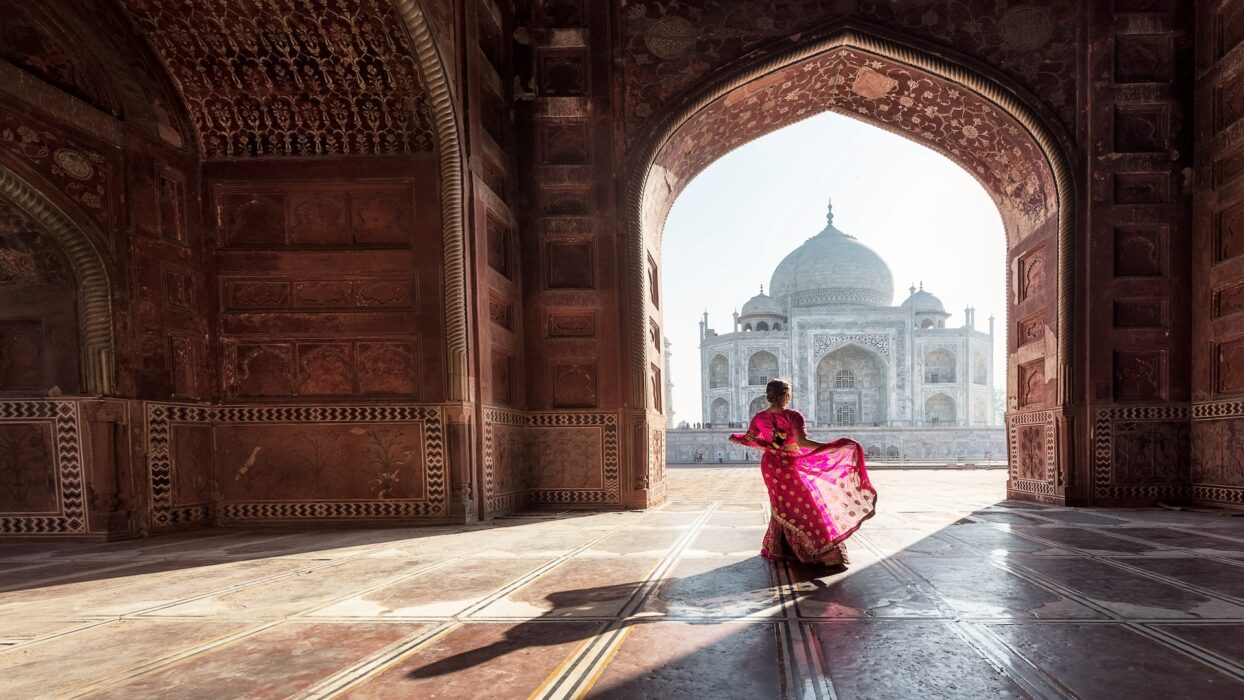
Agra is one of the most recognisable heritage cities in India, but the city makes more sense when it is understood as a Mughal capital rather than as a single-monument stop for the Taj Mahal. The Yamuna River, the imperial fort, garden-tombs, planned riverfront estates and craft traditions all belong to the same historical landscape. For private travellers, the most important planning decision is usually timing. The Taj Mahal rewards an early start when the light is softer and the temperature more comfortable, while Agra Fort can be visited later without making the day feel rushed. The city is easily reached from Delhi by expressway and sits naturally between Delhi and the Krishna pilgrimage towns of Mathura and Vrindavan, which is why we often use Agra as the heritage bridge in longer sacred North India journeys.
The Taj Mahal is the obvious centrepiece, yet the experience is better when guests know what to expect before arriving. Security screening, restrictions on bags and food, walking from the vehicle drop area and seasonal crowd levels all affect the visit. A private guide adds value by explaining the architecture, symbolism, calligraphy, garden design and the relationship between the mausoleum and the river instead of simply repeating a list of dates. Sunrise can be beautiful, but it is not automatically the best choice for every traveller; winter fog, very early hotel departures and the day of the week matter. The Taj is closed to general visitors on Fridays, so we build the Agra sequence around the actual travel date rather than forcing a standard programme.
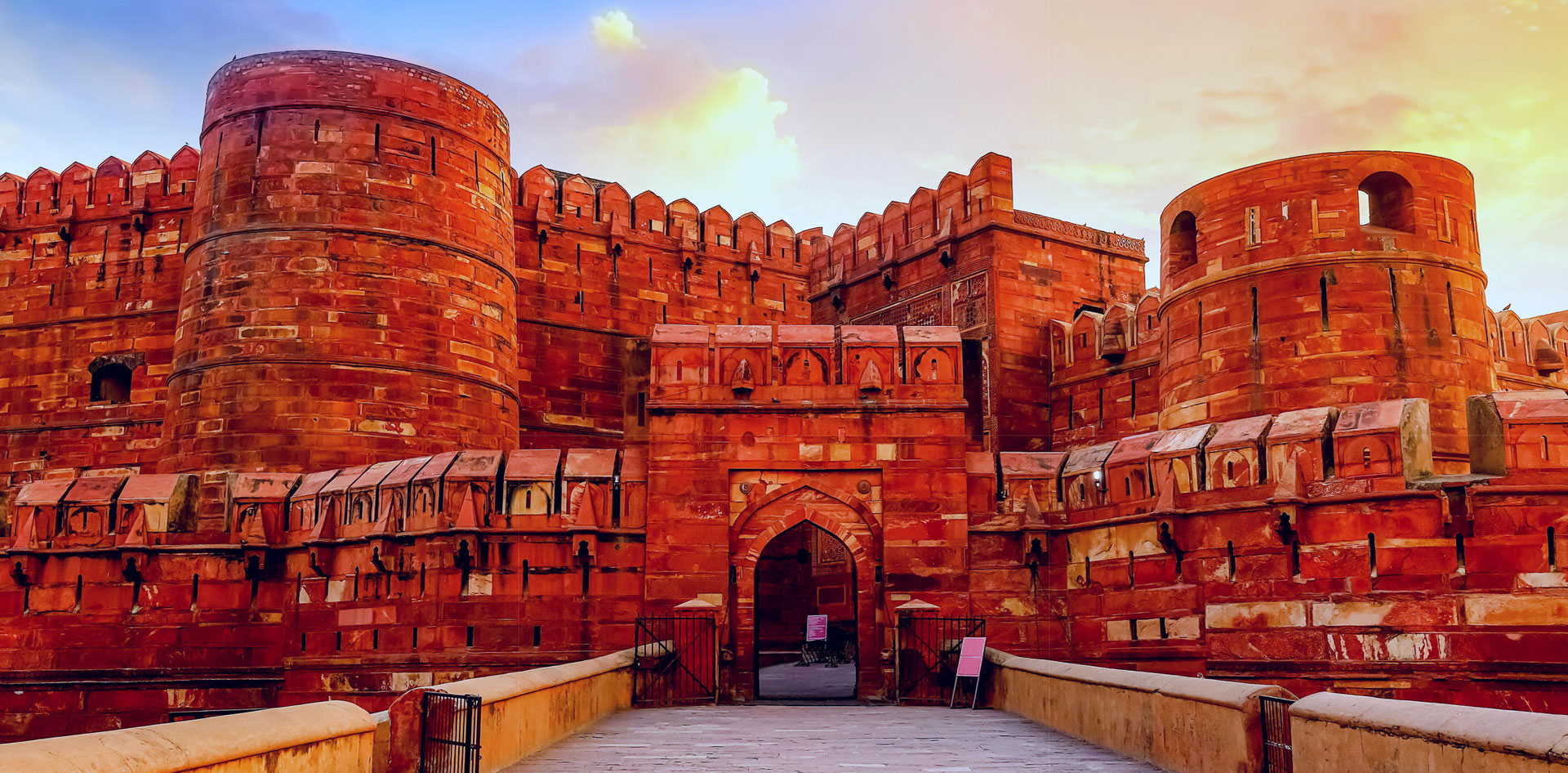
Agra Fort provides the political context that the Taj alone cannot. The red-sandstone and marble complex developed under several Mughal emperors, and its palaces, audience halls and river-facing spaces reveal how imperial life and administration worked. From selected points inside the fort, the Taj can be seen across the Yamuna, giving a useful geographical connection between the two monuments. Itmad-ud-Daulah, often called the Baby Taj, and Mehtab Bagh on the opposite bank add another layer for guests who have more time. We normally choose one of these rather than stacking every site into the same afternoon. The result is a calmer day with enough time to appreciate scale, detail and the changing character of Mughal architecture.
Agra also remains a city of skilled craft. Marble inlay, stone carving, carpet work and leather production have long been associated with local workshops, but we treat shopping as optional and separate from the historical value of the journey. Guests interested in pietra dura can visit a carefully chosen workshop to understand how stone is cut and fitted before deciding whether they want to purchase anything. One night is enough for the Taj and Agra Fort when arrival and departure times are sensible; two nights allows the monuments to be seen at a gentler pace and makes room for Mehtab Bagh, Itmad-ud-Daulah or a craft experience. Agra works particularly well with Delhi, Mathura and Vrindavan, and it also forms a logical western chapter before continuing to Ayodhya, Prayagraj and Varanasi.
Best forMughal heritage · architecture · first-time India
Suggested stay1–2 nights
Typical paceEarly start + monument walking
Planning stylePrivate & flexible