A useful one-day Prayagraj visit starts at Triveni Sangam, then adds selected temples and one heritage stop. On major bathing dates the same route can take far longer because barricades and vehicle restrictions change completely.
Prayagraj is often treated as a quick stop between Varanasi and Ayodhya, but the city deserves a properly sequenced half or full day. The key is to begin with the Sangam while energy is high and keep the rest of the programme flexible.
Why Prayagraj needs realistic planning
Prayagraj is most meaningful when the Triveni Sangam is treated as the centre of the visit rather than one stop in a long city checklist. The confluence of the Ganga and Yamuna, together with the sacred tradition of the Saraswati, has made Prayagraj one of India’s great pilgrimage places. For a first-time visitor we normally begin with the river while the day is still relatively cool and movement is easier. The exact boarding point, boat arrangement and amount of walking can vary with river level, local controls and the religious calendar. On major snan dates the entire traffic pattern can change, so a route that takes a few hours on an ordinary day may require a very different plan during a large bathing event.
How we would structure the visit
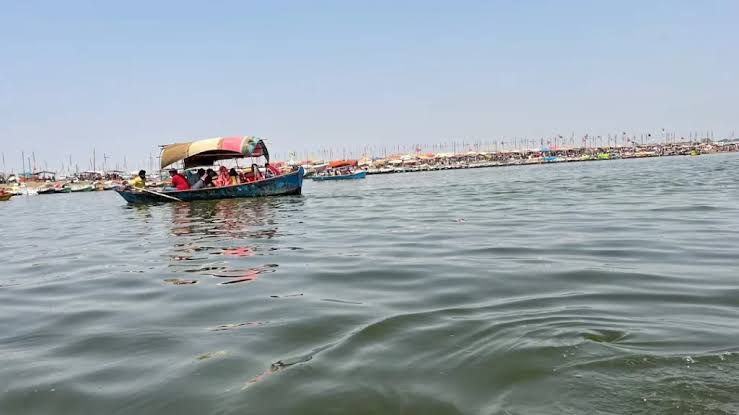
A private boat to the Sangam point gives the clearest experience of the confluence and allows time for prayer, a simple ritual or quiet observation according to the traveller’s interest. We do not rush every guest into a ceremony; some visitors want a priest and a formal sankalp, while others simply want to understand the geography and significance of the place. Life jackets, boarding assistance and a realistic assessment of the steps or temporary riverbank approach matter, particularly for senior travellers. The boat should therefore be arranged according to the day’s conditions rather than treated as a fixed sightseeing ticket.
Triveni Sangam
The Sangam is the anchor of a Prayagraj visit. A local boat normally takes visitors from the practical boarding area towards the confluence, but boarding points can move with river level and administrative arrangements. The experience is strongest when enough time is left for the boat journey and for whatever form of prayer or observation the guest wants at the confluence. On major bathing dates, vehicle restrictions and pedestrian controls may begin far from the river, so the same programme requires substantially more time. We recommend a morning visit whenever the wider itinerary allows.
Bade Hanuman Ji
Bade Hanuman Ji, close to the Sangam area, is one of Prayagraj’s best-known active temples and is famous for the reclining form of Hanuman. It can become crowded on Tuesdays, Saturdays and major religious dates. Because the temple lies in the broader Sangam movement zone, it is sensible to combine it with the river rather than leave and return later through traffic. Footwear, queues and local security arrangements should be treated as part of the visit, particularly for travellers who need a slower pace.
Alopi Devi Temple
Alopi Devi is an important local Shakti shrine and adds a different devotional tradition to the Sangam-focused day. The temple is active and the experience depends more on worship and local belief than on monumental architecture. We include it when the guest is interested in Prayagraj’s sacred circuit and when traffic allows a coherent route. It should not be added merely to increase the number of temple names on an itinerary.
Practical planning notes
We do not build this journey around fixed internet timings copied months in advance. Temple procedures, monument openings, traffic controls, road conditions and local access can change. The sensible approach is to confirm the important operating details close to travel, keep enough buffer around the most important visit, and avoid adding another major stop simply because it appears close on a map.
For senior travellers or anyone with limited mobility, tell us before travel rather than after arrival. We can shorten walking sections, choose more practical hotel locations, place rest time between outings and avoid combining several physically demanding visits in one block. Private transport is valuable, but in India’s sacred and heritage districts the final approach is often still pedestrian-controlled.
Plan this journey privately
Share your dates, interests and preferred pace. We will suggest a practical private programme rather than a generic sightseeing checklist.