Use one day for Mathura and one for Vrindavan. Trying to cover both cities, Govardhan, Barsana and Nandgaon in the same two days usually creates more road and queue time than meaningful temple time.
Mathura and Vrindavan are close on the map but they do not feel like the same destination. A two-day first visit works because it gives each place a distinct block of time and leaves room for temple queues, short walks and an evening atmosphere.
Start with Mathura
Mathura is the historic urban centre of Braj and is revered in Hindu tradition as the birthplace of Krishna. For many travellers it is paired automatically with Vrindavan, only a short drive away, but the two places have distinct personalities. Mathura feels like an older pilgrimage city built around the Yamuna, dense bazaars and long-established temple neighbourhoods; Vrindavan is more concentrated around Krishna-Radha devotion and a large network of temples and ashrams. A good programme gives each place its own block of time instead of using “Mathura–Vrindavan” as a single two-hour stop on the way from Delhi to Agra. This is particularly important during Janmashtami, Holi and major Ekadashi dates, when crowd controls can transform travel times and temple access.
Continue with Vrindavan
Vrindavan is one of India’s most intensely devotional temple towns. Associated with Krishna’s youth and the traditions of Radha-Krishna bhakti, it contains hundreds of temples, ashrams and sacred groves within a relatively small urban area. The apparent closeness of the temples can be misleading: worship schedules, pedestrian lanes, crowd barriers and festival traffic determine how much can actually be visited in a day. This is why we resist the common package-tour promise of covering every famous temple in a few hours. A better visit identifies three or four important temples, leaves space for the lanes and Yamuna, and uses a local guide who understands when a route should be changed. Vrindavan pairs naturally with Mathura, but it deserves a separate half day at minimum and ideally its own evening.
Mathura: Shri Krishna Janmasthan
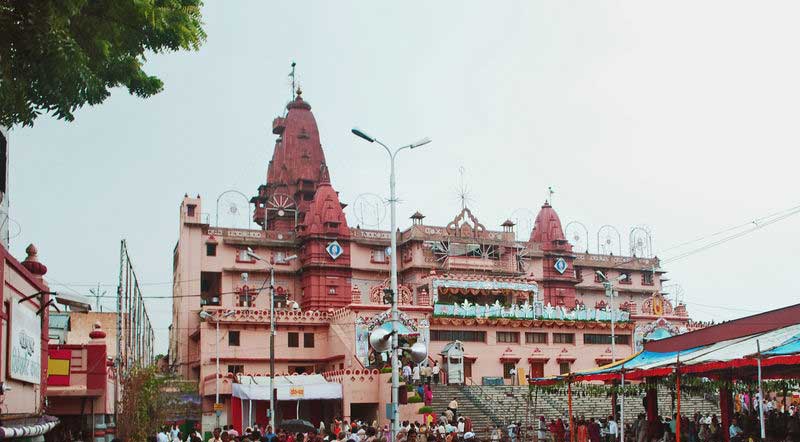
Shri Krishna Janmasthan is the principal pilgrimage complex in Mathura and is associated by tradition with the place of Krishna’s birth. Security is strict and rules on phones, bags and photography should be expected to change according to official instructions. The experience can involve more waiting than walking, especially on weekends, Janmashtami and major devotional dates. We schedule it as the anchor of the Mathura visit rather than placing another fixed-time activity immediately afterwards. A guide helps with orientation and context, but no guide can legitimately guarantee a particular queue or priority entry.
Mathura: Dwarkadhish Temple & Old Mathura
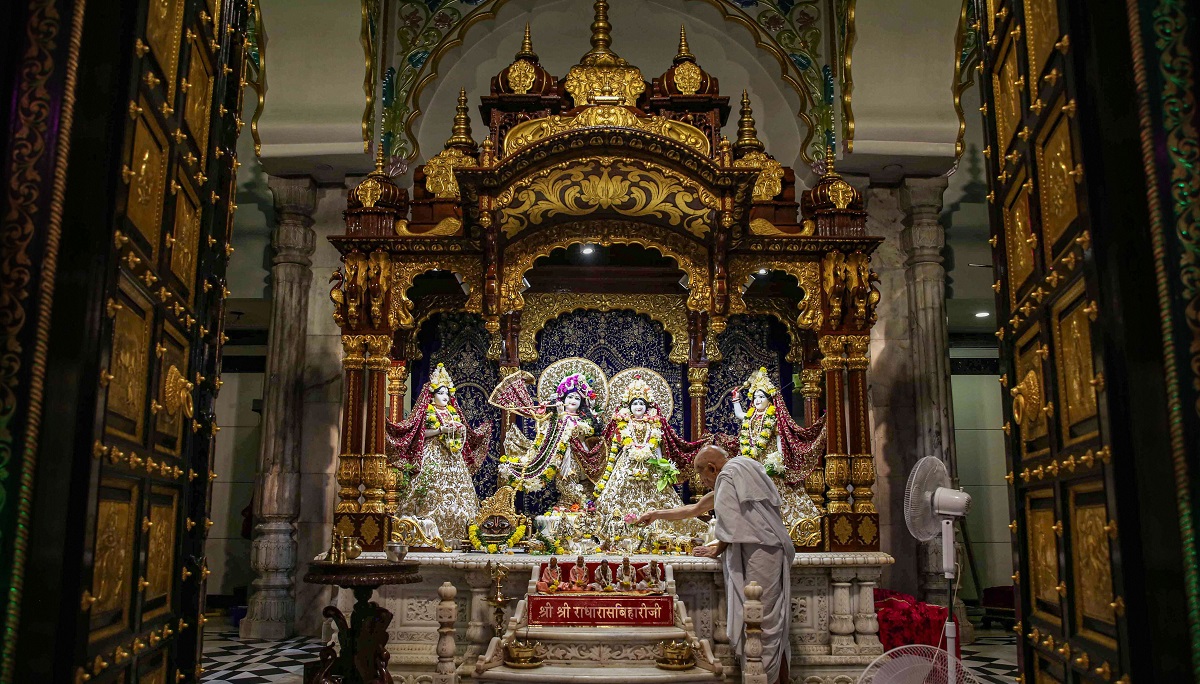
Dwarkadhish Temple is one of the city’s most important active Krishna temples and sits within the dense old-city fabric close to the Yamuna. The approach through markets and narrow lanes is part of the experience and gives a very different impression from the secured Janmasthan complex. Temple opening follows worship schedules, so there can be periods in the middle of the day when darshan is not possible. We therefore check current timings and build the walking route around them. Combining Dwarkadhish with nearby bazaars and Vishram Ghat creates a coherent half-day rather than a series of disconnected vehicle stops.
Vrindavan: Banke Bihari Temple
Banke Bihari is among Vrindavan’s most revered temples and is the place where many pilgrims most strongly feel the town’s devotional energy. The final approach is through narrow pedestrian lanes that can become tightly packed, particularly on weekends and festival dates. Darshan follows the temple’s own ritual rhythm, and opening periods can change seasonally or for special occasions. We avoid attaching another fixed appointment immediately after the visit because queue time is difficult to predict. Guests who dislike dense crowds should discuss this in advance so we can choose a calmer time or emphasise other temples instead.
Vrindavan: Prem Mandir
Prem Mandir is a large modern temple complex known for its white marble architecture, landscaped grounds and evening illumination. It is physically easier to navigate than many old-town temples, although the entrance area can still attract heavy crowds after sunset. Relief panels and scenes associated with Krishna’s life make it visually accessible even for visitors who are new to the traditions of Braj. We often place it toward the end of the Vrindavan day, after older temples and lanes. Light shows and illumination schedules can change, so we never design the entire evening around a guaranteed performance time.
Practical planning notes
We do not build this journey around fixed internet timings copied months in advance. Temple procedures, monument openings, traffic controls, road conditions and local access can change. The sensible approach is to confirm the important operating details close to travel, keep enough buffer around the most important visit, and avoid adding another major stop simply because it appears close on a map.
For senior travellers or anyone with limited mobility, tell us before travel rather than after arrival. We can shorten walking sections, choose more practical hotel locations, place rest time between outings and avoid combining several physically demanding visits in one block. Private transport is valuable, but in India’s sacred and heritage districts the final approach is often still pedestrian-controlled.
Plan this journey privately
Share your dates, interests and preferred pace. We will suggest a practical private programme rather than a generic sightseeing checklist.