Delhi is often the best international gateway even when it is not the main destination. If your priorities are Agra, Mathura, Vrindavan and the sacred cities farther east, it can be smarter to use Delhi for arrival, rest and onward movement rather than forcing a full city tour.
Many North India journeys begin at Delhi Airport, but that does not mean every itinerary needs the same standard Delhi sightseeing day. The right choice depends on flight timing, jet lag, onward road distance and whether the capital itself is important to you.
Why Delhi needs realistic planning
Delhi is not one city but several historical capitals layered across a vast modern metropolis. Mughal Old Delhi, the broad imperial avenues of New Delhi, medieval monuments farther south and contemporary neighbourhoods all belong to different periods, and trying to cover them in one hurried day produces more time in traffic than at the sites themselves. For this reason, we treat Delhi differently depending on the journey. On many of our longer sacred routes it is simply the arrival or departure gateway, with no compulsory sightseeing. When a guest genuinely wants to explore the capital, however, we build a focused day around a small number of areas rather than attaching a generic city tour to every programme.
How we would structure the visit
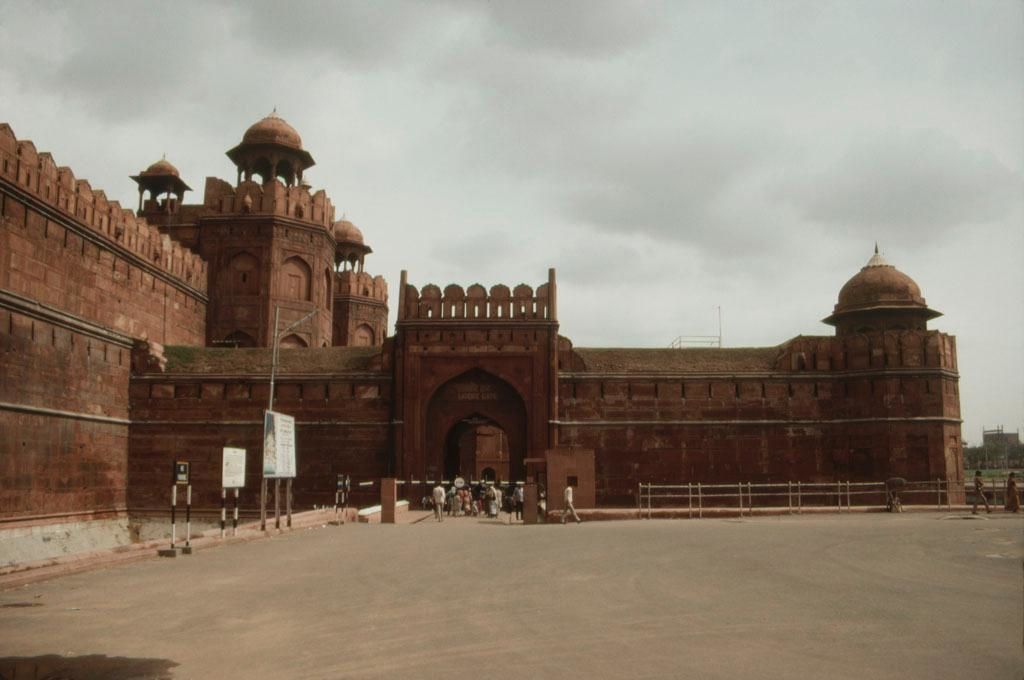
Old Delhi is the most intense part of the city for many first-time visitors. The Red Fort stands at the edge of the historic Shahjahanabad area and helps explain the scale and ambition of the Mughal capital. Nearby Jama Masjid, Chandni Chowk, old markets, food lanes and religious sites create a dense urban experience that is better explored partly on foot or by carefully chosen local transport. Vehicle access and security controls vary, particularly around national events and major religious dates. A private guide is valuable not only for history but for deciding when a walking section makes more sense than repeatedly moving the car through congested streets.
Red Fort & Shahjahanabad
The Red Fort is the monumental anchor of Shahjahanabad, the Mughal city built under Shah Jahan. Its gateways, audience halls and surviving palace spaces provide a strong introduction to imperial Delhi. Security and national-event closures can affect access, especially around Independence Day and other official dates. The fort is most meaningful when connected to the surrounding Old Delhi geography rather than visited as an isolated red wall. We usually combine it with a guided Old Delhi sequence according to the day’s traffic and walking conditions.
Jama Masjid & Old Delhi
Jama Masjid stands within the dense urban fabric of Old Delhi and remains an active place of worship. A visit can be combined with selected lanes of Chandni Chowk, markets and food areas to show how historic Shahjahanabad still functions as a living commercial district. Dress, prayer timings and respectful behaviour matter because the mosque is not simply a monument. Traffic around the old city can be slow, so walking or local transport is often more practical than repeatedly repositioning a private car. We tailor the route to guest comfort and do not make street-food tasting compulsory.
India Gate & Central New Delhi
India Gate is the best-known landmark on New Delhi’s ceremonial axis and is surrounded by broad avenues and government districts. The area provides a dramatic contrast to the narrow streets of Old Delhi. Security arrangements and state functions can change where vehicles may stop or how close visitors can approach. We therefore treat the drive through central New Delhi as a flexible orientation rather than promising a fixed sequence of roadside stops. It works especially well between Old Delhi and the southern monuments when traffic conditions are favourable.
Practical planning notes
We do not build this journey around fixed internet timings copied months in advance. Temple procedures, monument openings, traffic controls, road conditions and local access can change. The sensible approach is to confirm the important operating details close to travel, keep enough buffer around the most important visit, and avoid adding another major stop simply because it appears close on a map.
For senior travellers or anyone with limited mobility, tell us before travel rather than after arrival. We can shorten walking sections, choose more practical hotel locations, place rest time between outings and avoid combining several physically demanding visits in one block. Private transport is valuable, but in India’s sacred and heritage districts the final approach is often still pedestrian-controlled.
Plan this journey privately
Share your dates, interests and preferred pace. We will suggest a practical private programme rather than a generic sightseeing checklist.