Banke Bihari is an active pilgrimage temple in a dense pedestrian area, not a monument with predictable sightseeing flow. Start early, carry very little, and use a guide who can adjust the sequence when crowd controls change.
Vrindavan rewards travellers who understand that the temples operate according to worship, not tourist convenience. The most famous shrines are spread between dense old lanes and newer temple districts, so the route matters as much as the list of names.
Why Vrindavan needs realistic planning
Vrindavan is one of India’s most intensely devotional temple towns. Associated with Krishna’s youth and the traditions of Radha-Krishna bhakti, it contains hundreds of temples, ashrams and sacred groves within a relatively small urban area. The apparent closeness of the temples can be misleading: worship schedules, pedestrian lanes, crowd barriers and festival traffic determine how much can actually be visited in a day. This is why we resist the common package-tour promise of covering every famous temple in a few hours. A better visit identifies three or four important temples, leaves space for the lanes and Yamuna, and uses a local guide who understands when a route should be changed. Vrindavan pairs naturally with Mathura, but it deserves a separate half day at minimum and ideally its own evening.
How we would structure the visit
Banke Bihari Temple is the emotional centre for many visitors. Darshan is famous for its intensity, and the temple can become extremely crowded on weekends, festivals and special devotional dates. The lanes around it are narrow and vehicle access is limited, so guests should expect a pedestrian approach. ISKCON’s Krishna Balaram Mandir is physically easier to visit and introduces a different modern international dimension of Vrindavan devotion. Prem Mandir, with its large illuminated complex, is often best scheduled in the late afternoon or evening. Radha Raman Temple, smaller and older in atmosphere, offers another contrasting experience. Trying to see all four consecutively without breaks can make the day feel more like queue management than pilgrimage.
Banke Bihari Temple
Banke Bihari is among Vrindavan’s most revered temples and is the place where many pilgrims most strongly feel the town’s devotional energy. The final approach is through narrow pedestrian lanes that can become tightly packed, particularly on weekends and festival dates. Darshan follows the temple’s own ritual rhythm, and opening periods can change seasonally or for special occasions. We avoid attaching another fixed appointment immediately after the visit because queue time is difficult to predict. Guests who dislike dense crowds should discuss this in advance so we can choose a calmer time or emphasise other temples instead.
Prem Mandir
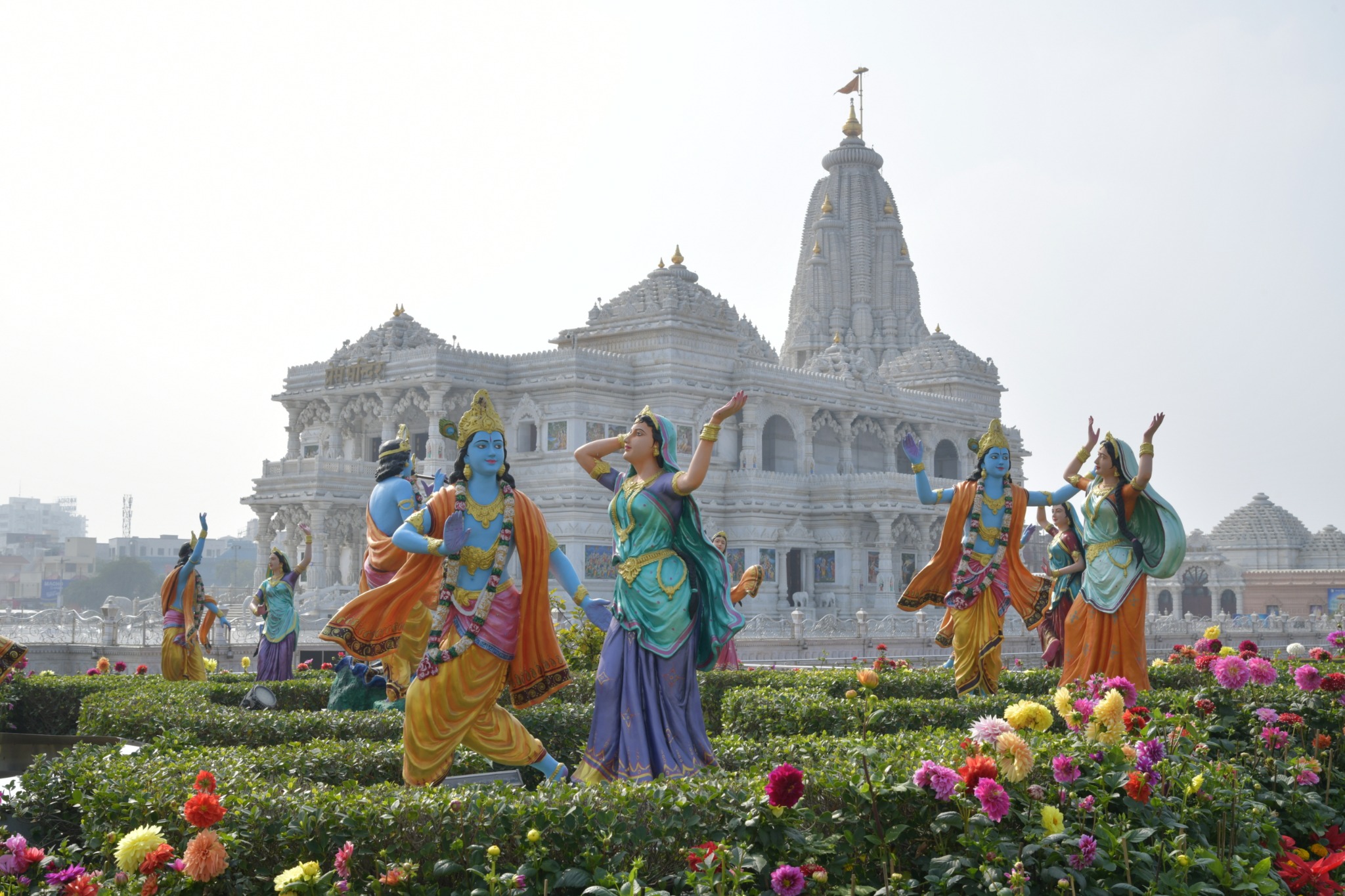
Prem Mandir is a large modern temple complex known for its white marble architecture, landscaped grounds and evening illumination. It is physically easier to navigate than many old-town temples, although the entrance area can still attract heavy crowds after sunset. Relief panels and scenes associated with Krishna’s life make it visually accessible even for visitors who are new to the traditions of Braj. We often place it toward the end of the Vrindavan day, after older temples and lanes. Light shows and illumination schedules can change, so we never design the entire evening around a guaranteed performance time.
ISKCON Krishna Balaram Mandir
ISKCON’s Krishna Balaram Mandir gives Vrindavan a strong international devotional dimension and is familiar to visitors from many countries. The complex is relatively organised and can be a comfortable first temple for guests who are still learning local customs. Kirtan and worship create a living atmosphere rather than a monument-style visit, and the experience changes according to the temple’s daily schedule. Dress and respectful conduct remain important even though the environment may feel more accessible to international guests. We normally allow enough time to sit and listen instead of simply entering for a photograph and leaving.
Practical planning notes
We do not build this journey around fixed internet timings copied months in advance. Temple procedures, monument openings, traffic controls, road conditions and local access can change. The sensible approach is to confirm the important operating details close to travel, keep enough buffer around the most important visit, and avoid adding another major stop simply because it appears close on a map.
For senior travellers or anyone with limited mobility, tell us before travel rather than after arrival. We can shorten walking sections, choose more practical hotel locations, place rest time between outings and avoid combining several physically demanding visits in one block. Private transport is valuable, but in India’s sacred and heritage districts the final approach is often still pedestrian-controlled.
Plan this journey privately
Share your dates, interests and preferred pace. We will suggest a practical private programme rather than a generic sightseeing checklist.