For one day in Agra, prioritise the Taj Mahal and Agra Fort. Add Mehtab Bagh or Itmad-ud-Daulah only if arrival time, season and your pace genuinely allow it. The Taj Mahal is closed to general visitors on Fridays.
Agra can be done well in one day, but only if the day is built around two major monuments rather than a long checklist. The Taj Mahal deserves the freshest part of the day; Agra Fort then explains the imperial city around it.
Why Agra needs realistic planning
Agra is one of the most recognisable heritage cities in India, but the city makes more sense when it is understood as a Mughal capital rather than as a single-monument stop for the Taj Mahal. The Yamuna River, the imperial fort, garden-tombs, planned riverfront estates and craft traditions all belong to the same historical landscape. For private travellers, the most important planning decision is usually timing. The Taj Mahal rewards an early start when the light is softer and the temperature more comfortable, while Agra Fort can be visited later without making the day feel rushed. The city is easily reached from Delhi by expressway and sits naturally between Delhi and the Krishna pilgrimage towns of Mathura and Vrindavan, which is why we often use Agra as the heritage bridge in longer sacred North India journeys.
How we would structure the visit
The Taj Mahal is the obvious centrepiece, yet the experience is better when guests know what to expect before arriving. Security screening, restrictions on bags and food, walking from the vehicle drop area and seasonal crowd levels all affect the visit. A private guide adds value by explaining the architecture, symbolism, calligraphy, garden design and the relationship between the mausoleum and the river instead of simply repeating a list of dates. Sunrise can be beautiful, but it is not automatically the best choice for every traveller; winter fog, very early hotel departures and the day of the week matter. The Taj is closed to general visitors on Fridays, so we build the Agra sequence around the actual travel date rather than forcing a standard programme.
Taj Mahal
The Taj Mahal is Agra’s defining monument and deserves enough time for the approach, security, gardens, main platform and the mausoleum itself. Early morning can offer softer light and cooler temperatures, although winter fog and seasonal opening times need to be considered. Bags and certain items are restricted, so arriving prepared makes the entry process easier. A private guide can explain the geometry, marble inlay, calligraphy and riverfront setting without turning the visit into a hurried photo stop. The Taj Mahal is closed to general visitors on Fridays, and we always plan the Agra sequence around the actual date of travel.
Agra Fort
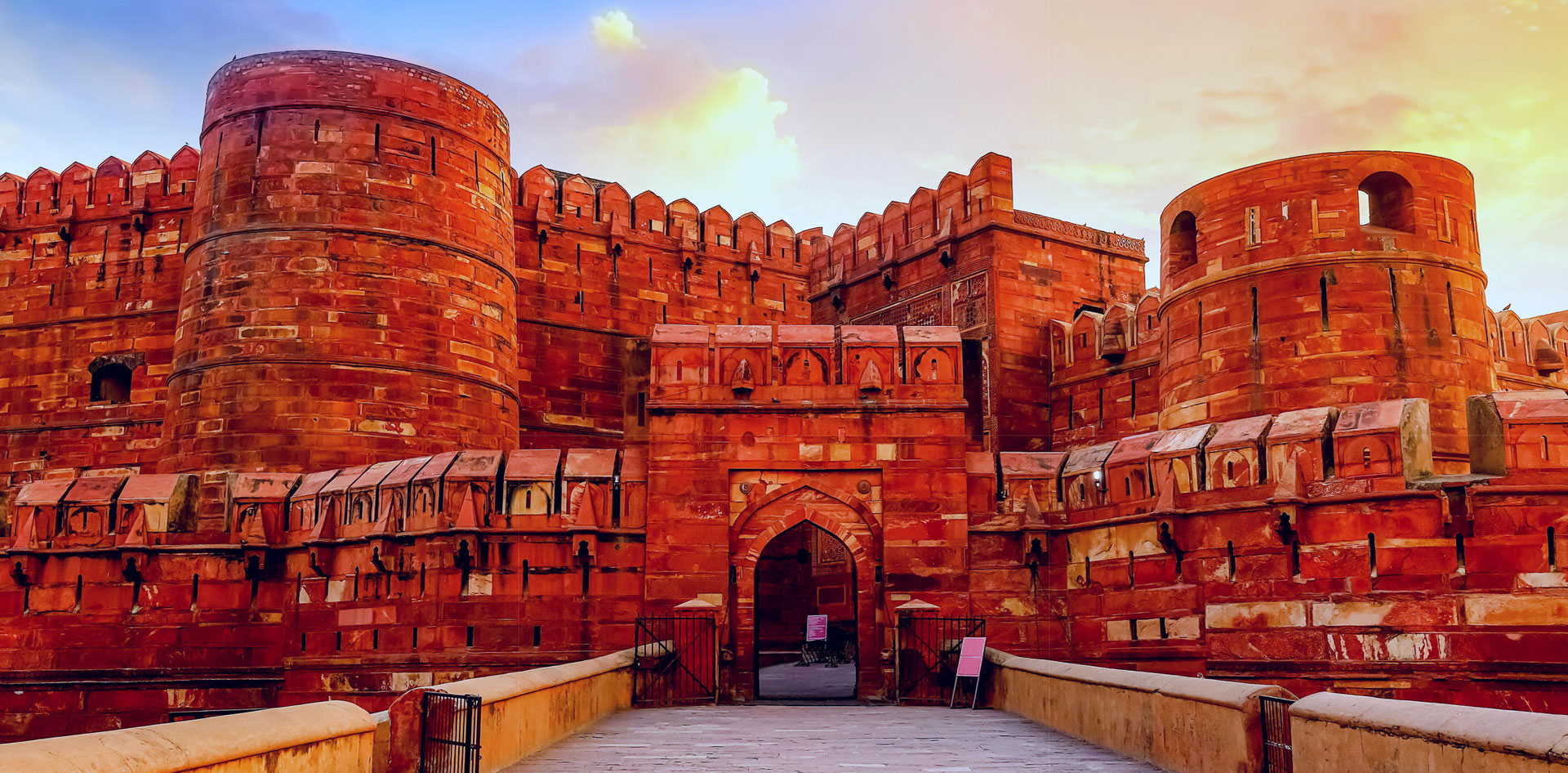
Agra Fort is the best place to understand the imperial city that existed alongside the Taj Mahal. Its red-sandstone walls contain palaces, audience halls, courtyards and later marble additions created under different Mughal rulers. Several viewpoints connect the fort visually with the Taj across the Yamuna. The complex involves steady walking but is easier to pace than the crowded Taj approach on many days. We normally visit it with the same private guide so the political and architectural story continues naturally from one monument to the other.
Mehtab Bagh & Yamuna View
Mehtab Bagh lies across the Yamuna from the Taj Mahal and offers a different way to understand the monument’s riverfront setting. The garden is especially attractive in the later afternoon when the light begins to soften. It is not a substitute for entering the Taj, but it can add perspective for travellers staying overnight in Agra. River conditions, haze and seasonal light affect the quality of the view, so we keep expectations realistic. We usually add Mehtab Bagh only when the day has enough breathing room rather than squeezing it between fixed monument visits.
Practical planning notes
We do not build this journey around fixed internet timings copied months in advance. Temple procedures, monument openings, traffic controls, road conditions and local access can change. The sensible approach is to confirm the important operating details close to travel, keep enough buffer around the most important visit, and avoid adding another major stop simply because it appears close on a map.
For senior travellers or anyone with limited mobility, tell us before travel rather than after arrival. We can shorten walking sections, choose more practical hotel locations, place rest time between outings and avoid combining several physically demanding visits in one block. Private transport is valuable, but in India’s sacred and heritage districts the final approach is often still pedestrian-controlled.
Plan this journey privately
Share your dates, interests and preferred pace. We will suggest a practical private programme rather than a generic sightseeing checklist.